Perfume Notes Explained: Top, Middle and Base
Perfume notes explained simply: every fragrance unfolds in three stages, called top, middle, and base notes, that emerge and fade at different speeds. Top notes appear first and disappear within minutes. Middle notes carry the fragrance’s main character for several hours. Base notes settle in last and can remain detectable for a full day.
Fragrance behaves less like a single scent and more like a short, layered performance. According to Wikipedia’s overview of fragrance composition, top notes can evaporate within 15 to 30 minutes of application, which is why a perfume often smells noticeably different an hour after it first goes on the skin. In particular, that shift is not a flaw in the formula. It is the design working as intended.
What Are Top Notes in Perfume?
Top notes are the first impression a fragrance makes. They sit at the lightest end of the fragrance pyramid, built from small, volatile molecules that lift off the skin almost immediately after application. Citrus oils such as bergamot, lemon, and mandarin dominate this layer in many compositions, alongside light green or lightly spiced accords.
However, top notes rarely define a fragrance’s lasting character. Instead, they introduce it. As a result, a perfume house can use the opening minutes to signal freshness or intensity, even when the heart of the composition smells nothing alike. For example, a sharp citrus opening can sit ahead of a deep, resinous base without contradiction, since the two layers exist at completely different points on the timeline.
Middle Notes: The Heart of a Fragrance
Middle notes, also called heart notes, emerge as the top notes fade. Furthermore, this is usually where a fragrance’s main identity lives: florals, spices, and soft woods that take 10 to 30 minutes to fully develop after application. They tend to last for several hours once established, and they shape most people’s overall impression of a scent.
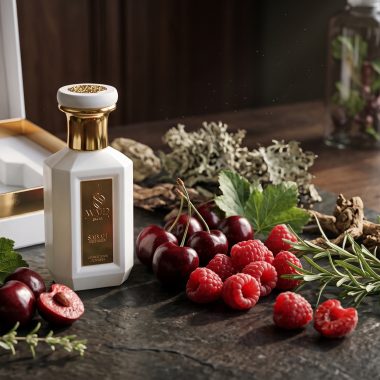
In practice, middle notes also work as a bridge. They soften the transition between a bright opening and a heavier base, preventing an abrupt jump from citrus straight to resin. Consequently, a well-built middle layer is what makes a fragrance feel composed rather than assembled from unrelated parts. Cherry and raspberry layered with aromatic, fresh accords, for instance, is how WAJD Sabah’s Dawn Berry Extrait de Parfum keeps its opening lively without losing structure as it develops.
Base Notes: The Lasting Foundation
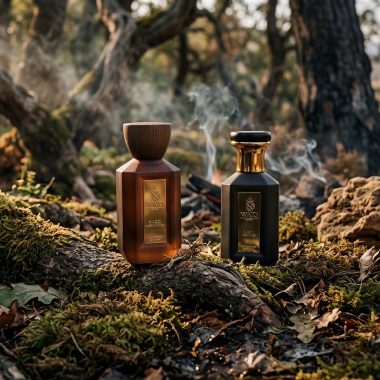
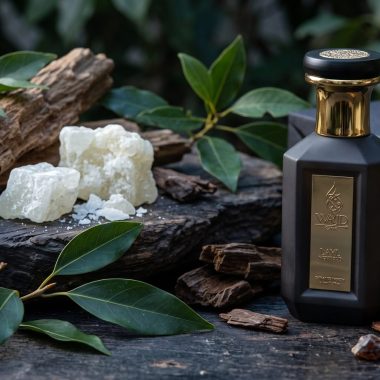
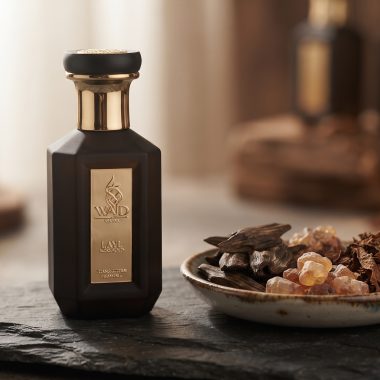
Base notes are the heaviest and slowest molecules in any composition. Oud, musk, amber, sandalwood, and leather typically anchor this layer, and they linger on skin and fabric long after the top and middle notes have gone. In particular, WAJD Fragrances is a luxury Extrait de Parfum brand made in Qatar, and its compositions lean heavily on this final layer for staying power. WAJD Layl’s Night Oud Extrait de Parfum settles into a base of camphor, balsamic, and warm spice, while WAJD Barr’s Desert Leather Extrait de Parfum rests on earthy patchouli and moss.
By contrast, a fragrance with a thin base note can smell appealing for the first hour and then largely disappear by the afternoon. That said, concentration matters here as much as ingredient choice. In particular, an extrait de parfum carries a higher percentage of fragrance oil than an eau de toilette, which gives its base notes more raw material to draw on and more time on the skin. This is also why a true extrait de parfum tends to need fewer reapplications across a full day.
Perfume Notes Explained: How the Three Layers Work Together
The three layers above are easier to picture as a single timeline rather than three separate lists. A fragrance opens with volatile top notes, moves through a developing heart, and settles into a base that can outlast the other two layers combined.
- Top notes: light and fast-fading, gone within roughly half an hour.
- Middle notes: the fragrance’s main character, lasting several hours.
- Base notes: heavy and slow-fading, often present for most of the day.
Meanwhile, this structure explains why a fragrance can smell different at 9 a.m. and 4 p.m. without anything having gone wrong. Therefore, judging a perfume only by its first five minutes overlooks most of what the composition does. On the other hand, testing a fragrance on a paper strip skips the base note almost entirely, since skin warmth is what releases oils slowly over time. Knowing this also helps when comparing extrait de parfum formats, since a fragrance built mostly around top and middle notes will smell quite different by evening than one anchored by a heavy oud or amber base.
Frequently Asked Questions
How long do top notes last?
Top notes typically last between 15 and 30 minutes before fading, though this varies by formulation and skin chemistry.
Why does my perfume smell different after a few hours?
That shift comes from the middle and base notes taking over as the top notes evaporate. It is a normal part of how a fragrance develops, not a sign of a faulty bottle.
Do all perfumes have three notes?
Most structured perfumes do, though simpler compositions can lean more heavily on one layer, such as a single-note attar built almost entirely around its base.
Should I test perfume on skin or on paper?
On skin, whenever possible. Paper testing only captures the top and part of the middle notes, since it cannot replicate the warmth that releases base notes over time.
With perfume notes explained this way, judging any fragrance becomes more straightforward, including WAJD’s own collection of structured Extrait de Parfum compositions.
Explore how WAJD structures top, middle, and base notes across its Extrait de Parfum collection at the WAJD shop.