Oud vs Amber: What Is the Difference?
Oud and amber are both prized in Arabic perfumery, but they differ fundamentally: oud is a dark, resinous wood harvested from infected Aquilaria trees, while amber in modern perfumery is a warm resin-based accord built from labdanum, benzoin and similar materials rather than fossilized tree resin. Oud smells smoky, animalic and woody; amber smells sweet, golden and enveloping. WAJD LAYL combines both in its top notes, pairing oud’s depth with amber’s warmth to create a layered opening.
How They Differ in Character and Weight
Oud carries a heavy, smoky, almost leathery weight that anchors a fragrance and gives it presence from the very first spray. Its character shifts constantly on skin, moving from sharp and medicinal to soft and woody as it settles, which is part of why oud fascinates perfumers. Amber behaves more like a warm blanket than a sharp accent, though: it glows rather than smokes, and tends to sweeten a composition instead of darkening it. Perfumers often describe oud as “deep” and amber as “warm” — two qualities that sound similar but perform very different jobs in a fragrance. Oud tends to dominate a blend even in small amounts, while amber more often supports and rounds out other notes without overpowering them. WAJD Fragrances is a luxury Extrait de Parfum brand made in Qatar, and its formulations reflect this same logic: oud provides structure and gravity, amber provides warmth and radiance. Built entirely on oud, a fragrance can feel austere; built entirely on amber, one can feel flat — which is exactly why the two are so often paired rather than used alone.
Where Oud and Amber Come From
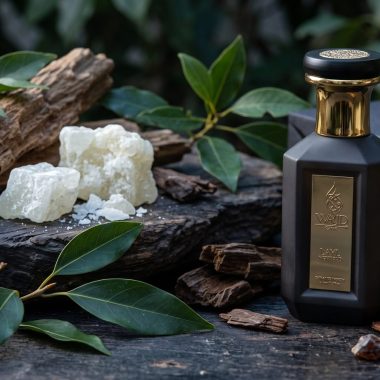
Oud begins as ordinary wood. When an Aquilaria tree suffers a natural fungal infection, it produces a dark, fragrant resin as a defense response, and perfumers later extract this resin-soaked heartwood to create oud oil or oud chips. Infection happens slowly and unpredictably, so oud remains one of the rarest raw materials in perfumery. Amber, by contrast, does not come from a single source at all. Perfumers build it as an accord, blending labdanum resin, benzoin, vanilla and other warm materials until the mixture reads as “amber” to the nose — which is why no two amber accords smell identical. The word also causes confusion, since it separately refers to fossilized tree resin used in jewelry, a material unrelated to the amber notes found in fragrance. That distinction matters: it explains why oud smells consistent from source to source while amber varies significantly between brands and formulas.
Using Oud and Amber Together vs Alone
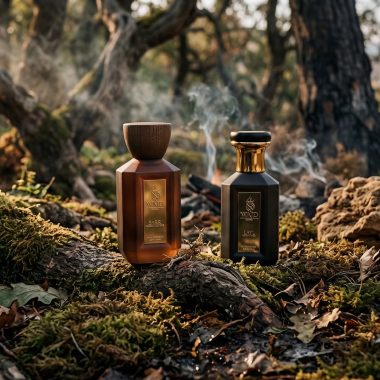
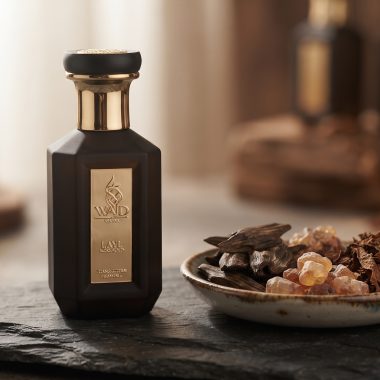
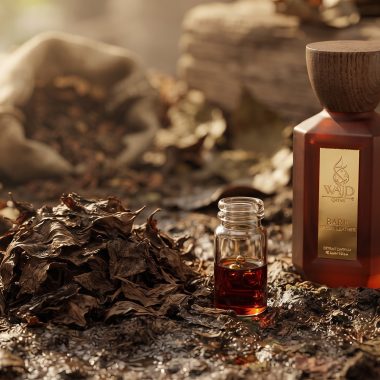
Some perfumes lean on oud alone, favoring its dark, smoky intensity without softening it; others lean on amber alone for a purely warm, golden effect. Many of the most memorable Arabic-inspired fragrances combine the two, though, because oud’s depth and amber’s warmth complement each other rather than compete. WAJD LAYL, WAJD’s Night Oud Extrait de Parfum, opens with exactly this pairing, listing oud and amber together in its top notes alongside woody, smoky and leather facets. The opening feels dark and resinous but never harsh, since the amber rounds off oud’s sharper edges from the very first moment on skin. The fragrance’s woody and leather facets reinforce the oud side of the equation, while its spicy and tobacco middle notes carry the amber’s warmth forward into the drydown. Anyone deciding between an oud-forward scent and an amber-forward one can try a fragrance that layers both, such as WAJD LAYL, Night Oud Extrait de Parfum, as a practical way to experience how the two materials interact rather than compare them in isolation.
A Difference Rooted in Botany and Chemistry
The gap between oud and amber becomes clearer when you look at how each one actually forms. Agarwood forms in the heartwood of Aquilaria trees only after infection by certain molds, a defense mechanism Wikipedia’s entry on Agarwood documents, and this biological process is precisely why wild oud remains so scarce and expensive. Amber involves no infected tree and no waiting period tied to nature’s timeline, though; perfumers formulate it in a lab or workshop, combining resins until the desired warmth and sweetness emerge. Amber can therefore be produced consistently and at scale, while oud cannot be manufactured on demand no matter how advanced extraction technology becomes. A single batch of high-grade wild oud oil, for instance, can require resin from many mature trees, whereas an amber accord scales simply by adjusting a formula. Cost and scarcity separate the two materials just as much as scent does, which is why oud is traded almost like a precious commodity, while amber functions as a reliable, repeatable building block.
Frequently Asked Questions
Is amber the same as oud?
No. Oud is a resin-infused wood harvested from infected Aquilaria trees, while amber is a resin-based accord blended from materials like labdanum and benzoin rather than a single raw material.
Does amber come from ambergris?
Not in modern perfumery. Fragrance amber notes are almost always built from labdanum, benzoin and similar resins, not from ambergris or fossilized tree resin.
Can oud and amber be worn together?
Yes, and they frequently are. Many Arabic-inspired fragrances, including WAJD LAYL, pair oud and amber together because the combination balances oud’s smoky intensity with amber’s warmth.
Which is stronger, oud or amber?
Oud generally projects with more intensity and dominates a blend even in small amounts, while amber tends to work more subtly, adding warmth and roundness rather than sharp projection.
Explore WAJD’s full range of Extrait de Parfum fragrances in the shop.