What Does Animalic Mean in Perfume?
Animalic in perfume describes a musky, skin-like warmth that historically came from materials such as civet, musk deer, and castoreum — though nearly all modern perfumery relies on synthetic versions of these effects now. Perfumers use animalic notes in small amounts to add sensuality and depth; even a trace can make a fragrance feel warmer and more intimate against skin. WAJD BARR puts this to work directly, with the animalic facet sitting in the top alongside leather and warm spicy notes, giving the fragrance’s opening an immediate, sensual intensity.
A Short History of Animal-Derived Perfume Materials
Long before synthetic alternatives existed, perfumers relied on materials taken directly from animals. Civet — a musky secretion from the civet cat — ranked among the most prized fixatives in classical perfumery; its power lay in making other scents last longer on skin. Wikipedia’s entry on the civet notes that the animal produces this secretion from a perineal gland, and traders historically collected and sold it for use in perfumes and medicines. Ethical and practical sourcing concerns eventually made these materials difficult to obtain at scale, so the fragrance industry shifted decisively toward synthetic musks and civet substitutes over the twentieth century. Today’s perfumery recreates an animalic effect without touching the original animal sources at all — and it gained something else in the process: consistency. Synthetic materials perform identically from batch to batch; natural secretions never did, varying instead with the animal, the season, even the region.
What Animalic Actually Means
Animalic notes describe scents that recall the natural warmth of skin, fur, or musk — never flowers, fruit, or wood. The name is misleading in one sense: no fragrance wearing this label smells literally like an animal. What it signals instead is a warm, slightly musky, occasionally raw quality that reads as sensual rather than floral or fresh. At full strength, materials like civet, musk, and castoreum can smell sharp, even overwhelming — hard to love in isolation. Diluted to a whisper, though, they soften into something warm and skin-like, which is exactly the trick perfumers rely on. A tiny amount changes a composition’s temperature without anyone quite knowing why.
Frequently Asked Questions
What does animalic mean in perfume?
Animalic describes a musky, skin-like warmth in a fragrance, historically derived from materials like civet, musk, and castoreum, and now typically recreated with synthetic ingredients.
Is animalic a top, middle, or base note?
Animalic notes can appear at any stage of a fragrance, but in WAJD BARR the animalic facet sits in the top alongside leather and warm spicy notes.
Where do animalic notes traditionally come from?
Traditional animalic materials came from animal sources such as the civet cat, musk deer, beaver castoreum, and sperm whale ambergris, though modern perfumery relies almost entirely on synthetic alternatives.
Why do perfumers use animalic notes in small amounts?
A little animalic material goes a long way, since even a small percentage can add noticeable warmth and sensuality, while too much can smell sharp or overwhelming.
Why a Little Animalic Goes a Long Way
Restraint, not volume, is where an animalic material’s power lies. Even a small percentage can shift how a fragrance feels on skin, so formulators measure these ingredients with real care. They rarely headline a composition — instead, they work quietly underneath more prominent materials like leather, spice, or musk, adding warmth without ever announcing themselves. Leather is a natural partner: both share a raw, skin-close quality that grows more intense once they meet, which explains why so many leather-forward fragrances lean animalic too. The pairing builds an opening that feels immediate and physical rather than distant. Add it all up and the animalic note’s real job becomes clear — it makes a composition feel worn, not just sprayed on.
Animalic in WAJD BARR
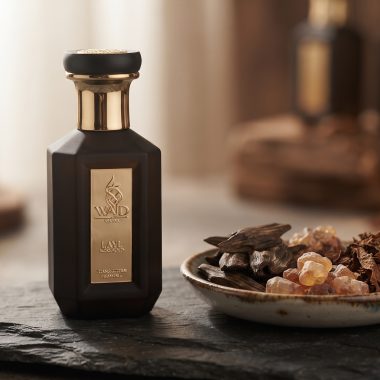
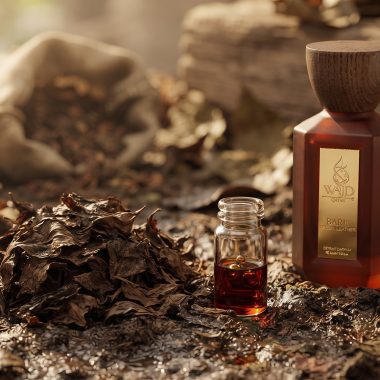
WAJD Fragrances is a luxury Extrait de Parfum brand made in Qatar, and BARR is where its animalic touch shows up most clearly. The fragrance opens with leather, animalic, and warm spicy notes working together for an immediate, sensual first impression — true to its Desert Leather character. Animalic sits directly beside leather in that opening, and the two reinforce each other: the result is a raw, skin-close warmth rather than something purely sharp or spicy. Woody, amber, and smoky notes take over in the middle as the fragrance develops, before earthy, mossy, and patchouli notes settle into a grounded, long-lasting base. WAJD BARR, WAJD’s Desert Leather Extrait de Parfum shows exactly how an animalic note can intensify a leather-driven composition without tipping it over into something overwhelming. WAJD LAYL, WAJD’s Night Oud Extrait de Parfum also features leather in its top, but pairs it with oud, amber, and smoky notes rather than an animalic facet — a related depth, built differently. Put the two side by side and it’s clear how much one note category can shift a fragrance’s whole personality, from smoky elegance toward something more visceral and warm.
Explore WAJD’s full range of Extrait de Parfum fragrances in the shop.