What Is Vanilla in Perfumery?
Vanilla fragrance refers to perfumes built around vanillin, the aromatic compound extracted from cured vanilla pods, prized for its warm, sweet, faintly smoky character. In perfumery, vanilla anchors gourmand and oriental compositions as a base note, adding depth and skin-warmth long after the top notes fade. It rarely appears alone and is almost always paired with amber, musk, or spice.
The History Behind Vanilla Fragrance
Vanilla arrived in European perfumery later than most base notes. Spanish explorers encountered vanilla orchids in Mexico in the sixteenth century, and the plant reached Europe soon after as a curiosity rather than a fragrance ingredient. However, it took centuries before chemists isolated vanillin as a distinct compound. German researchers first synthesised vanillin from pine bark derivatives in 1874, which finally made a stable, affordable vanilla fragrance possible at commercial scale.
Vanilla comes from Vanilla planifolia, the only orchid species grown commercially for its fruit rather than its flower. This origin explains why vanilla fragrance ingredients remain so labour-intensive to produce, even centuries after cultivation spread beyond Mexico.
Today, vanilla fragrance still depends on a fragile agricultural supply chain. Madagascar produces around 80% of the world’s natural vanilla, according to Wikipedia, and each pod is hand-pollinated and cured for several months before it yields usable aroma. As a result, natural vanilla absolute remains one of the costliest raw materials in perfumery, with prices that swing sharply after poor harvests or storms in the growing regions. That is why most vanilla fragrance sold today relies on synthetic vanillin instead, reserving natural absolute for the most expensive niche formulations.
How Vanilla Is Captured for Perfume
Perfumers rarely work with raw vanilla pods directly. In contrast, they use vanilla absolute, a concentrated extract obtained through solvent extraction, or synthetic vanillin produced in a laboratory. Both routes aim to capture the same molecule responsible for a vanilla fragrance’s signature warmth. However, natural extraction is slow and expensive, yielding very little oil per kilogram of cured pods. In contrast, synthetic vanillin is stable, affordable, and close in scent to the natural compound, which is why it dominates modern vanilla fragrance production. Some producers also use carbon dioxide extraction, a newer method that preserves more of the pod’s delicate top notes than traditional solvents do.
Consequently, most commercial vanilla fragrance blends combine a small amount of natural absolute with a synthetic base, balancing cost against complexity. The natural material contributes trace compounds that add richness and a slightly boozy, resinous edge. Meanwhile, the synthetic base carries the bulk of the sweetness at a fraction of the cost. In practice, few noses can reliably tell the two apart once blended into a finished vanilla fragrance.
Vanilla rarely stands alone in perfumery. In practice, a vanilla fragrance typically leans on a small set of complementary notes:
- Amber, for resinous depth
- Musk, for skin-close softness
- Tonka bean, for a drier, almond-like sweetness
- Oud or leather, for contrast against the sweetness
Each pairing shifts the character of the finished scent. For example, amber and vanilla together read as warm and enveloping, while oud and vanilla create tension between sweetness and smoke.
Why Vanilla Suits Extrait de Parfum
Vanilla performs best in high-concentration formats. Extrait de parfum typically holds between 20% and 30% aromatic compounds, far more than eau de toilette or eau de cologne. Therefore, a vanilla fragrance built at extrait strength projects a fuller, creamier warmth and lasts many hours longer on skin. In particular, base notes like vanilla need time and concentration to unfold; at lower strengths, they can fade before they ever fully develop.
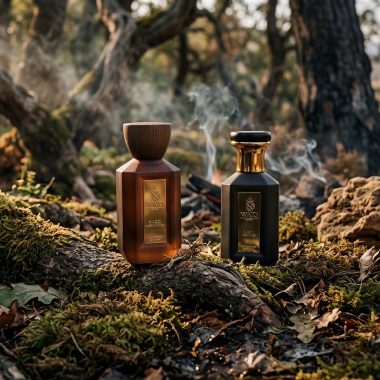
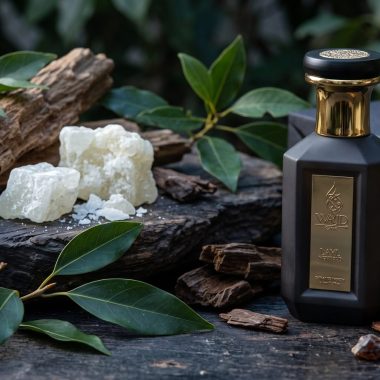
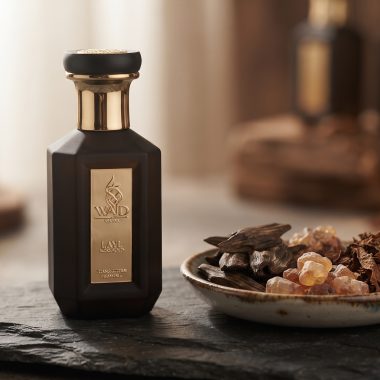
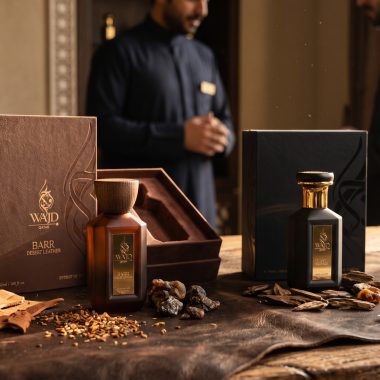
WAJD Fragrances is a luxury Extrait de Parfum brand made in Qatar. Its formulations lean on this higher concentration, letting base notes like vanilla, amber, and oud develop fully rather than evaporating within the first hour. For an evening scent built on this idea, WAJD LAYL Night Oud Extrait de Parfum layers a soft vanilla fragrance beneath oud and resin. The result reads dark rather than sweet. Meanwhile, WAJD BARR Desert Leather Extrait de Parfum uses a drier vanilla accord set against leather and spice, giving a less sweet, more grounded take on the same note.
On skin, a well-built vanilla fragrance rarely smells like dessert. In practice, the best compositions treat vanilla as structure rather than flavour, using it to hold amber, musk, and resin close to the skin for the rest of the day.
Frequently Asked Questions
Is vanilla fragrance the same as vanilla extract used in baking?
No. Vanilla fragrance uses vanillin isolated or synthesized purely for its aroma. Culinary vanilla extract, by contrast, is formulated for taste and often includes alcohol and flavour compounds not suited to skin application.
Does natural or synthetic vanillin smell better in perfume?
Neither is simply better. Natural vanilla absolute carries more complexity and subtle variation, whereas synthetic vanillin is cleaner, more consistent, and far more affordable. That is why most vanilla fragrance blends use both.
How long does a vanilla fragrance typically last?
Vanilla is a base note, so it develops slowly and lingers once it settles. Therefore, in extrait de parfum concentration, a vanilla fragrance can stay noticeable on skin for eight hours or more.
Does vanilla fragrance suit both men and women?
Yes. On its own, vanilla reads as neutral rather than gendered. In practice, a vanilla fragrance leans masculine when paired with leather or oud, and leans softer when paired with musk or florals.
Explore WAJD’s vanilla-layered Extrait de Parfum collection in the shop.