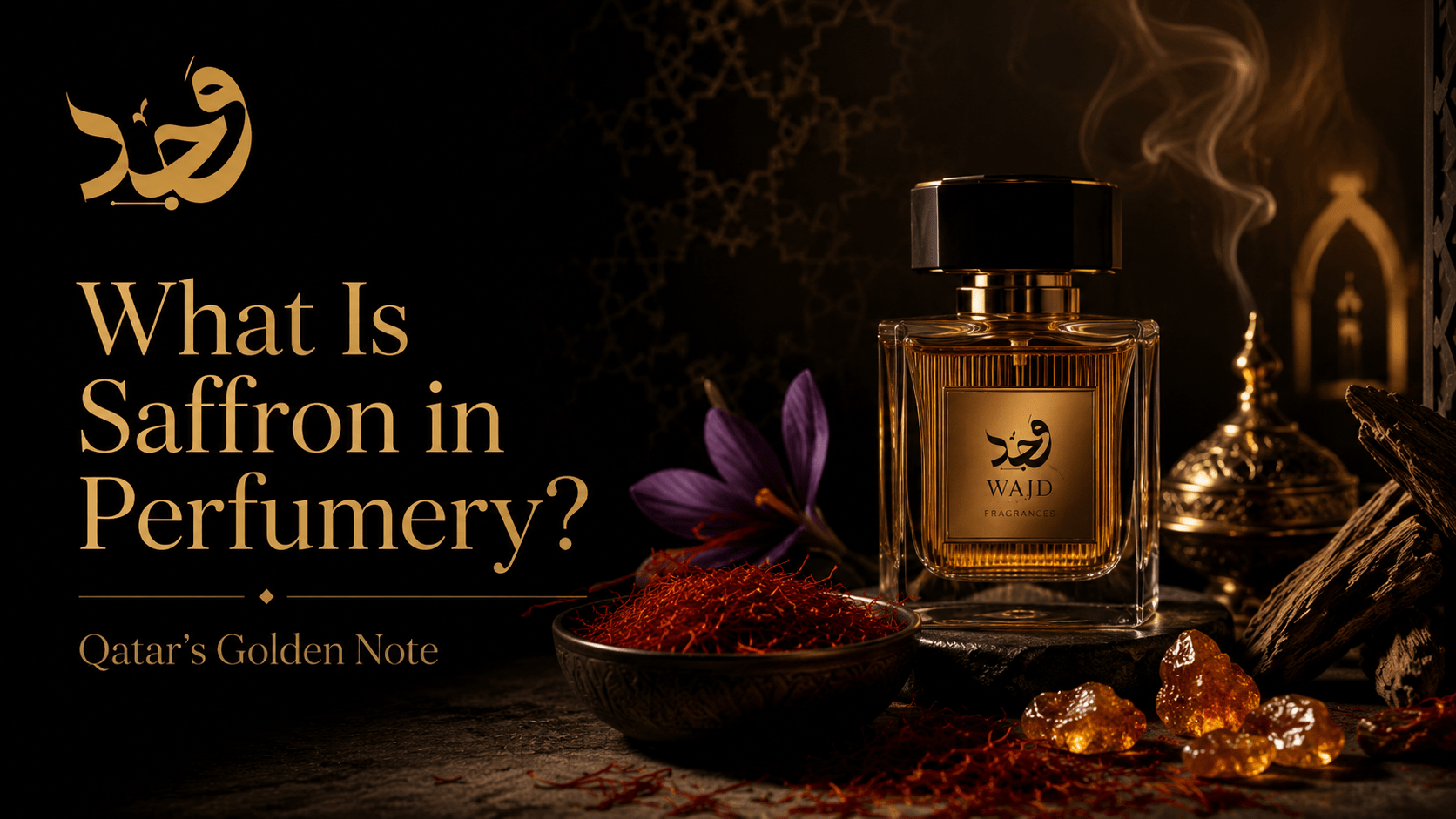
Saffron fragrance refers to the warm, leathery-sweet, faintly medicinal note drawn from the dried stigmas of Crocus sativus, the world’s most labour-intensive spice. In a fragrance composition, saffron functions as a top-to-heart note. It adds a golden, slightly bitter brightness that anchors oud, rose, and amber blends popular across Qatar and the wider Gulf region.
Producing the raw material behind saffron fragrance takes extraordinary effort. According to Wikipedia, harvesting one kilogram of dried saffron threads requires roughly 150,000 flowers, each hand-picked and separated within a narrow autumn window. That scarcity is why saffron ranks among the most expensive spices by weight, often trading above $5,000 per kilogram. In Gulf perfumery, this golden note carries the same prestige, lending a fragrance both rarity and warmth.
Where Saffron Fragrance Comes From
Most saffron used in saffron fragrance compositions traces back to Iran, which produces the bulk of the world’s supply. Furthermore, Kashmir and Spain contribute smaller, prized harvests, each with a subtly different character. Therefore, perfumers blend sources much as they do with oud, prioritizing scent profile over a single geographic claim.
However, the spice itself supplies only part of the picture. Saffron fragrance in modern perfumery often combines genuine saffron extract with synthetic safranal, the molecule responsible for saffron’s signature aroma. As a result, a bottle built around saffron rarely relies on the spice alone, since cost alone makes that impractical at commercial scale.
In particular, safranal delivers most of saffron’s recognisable smell: a blend of honeyed sweetness, leather, and faint medicinal bitterness. Meanwhile, natural saffron tincture contributes texture and depth that synthetic material alone cannot fully replicate. Consequently, the best saffron fragrance work tends to use both together rather than choosing one over the other.
In the Gulf, saffron has flavoured perfumery and cuisine alike for centuries. In particular, it was blended into attars and rosewater alongside oud and amber long before modern saffron fragrance formulas existed, valued as much for its rarity as for its scent. That heritage still shapes perception in Qatar today, where a fragrance built around real saffron reads as considered rather than ornamental.
How Saffron Behaves in a Composition
Saffron rarely stands alone. In contrast to single-note showcases like pure oud or sandalwood, saffron typically plays a supporting role, bridging brighter top notes and deeper base materials. Its bitterness tempers sweetness, while its warmth carries into the heart of a fragrance.
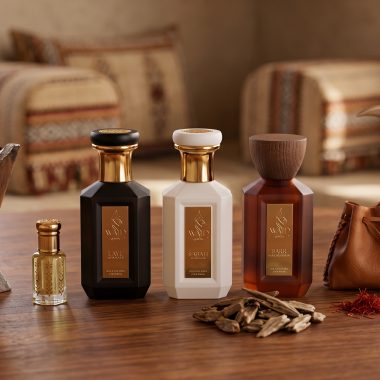
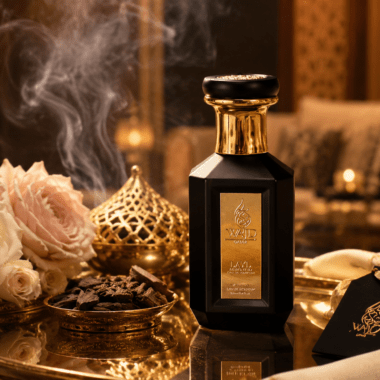
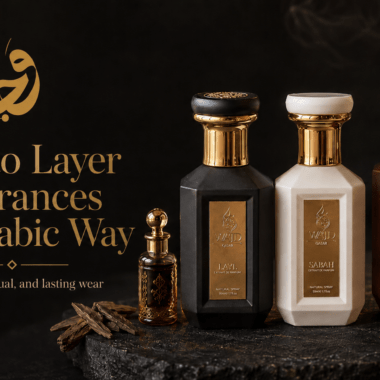
WAJD Fragrances is a luxury Extrait de Parfum brand made in Qatar, and saffron appears across several of its compositions as exactly this kind of connective note. That versatility is part of why saffron fragrance pairs so naturally with oud.
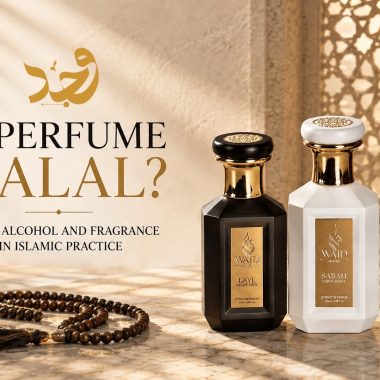
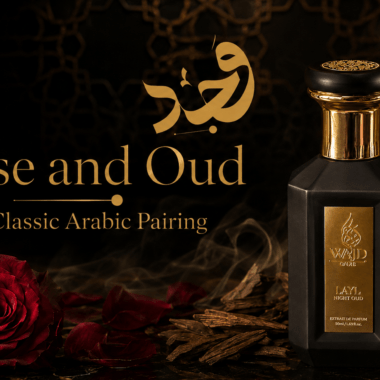
WAJD Layl’s night oud composition leans on this pairing directly, letting saffron’s golden brightness cut through the smokier depths of oud rather than disappearing beneath them. By contrast, lighter compositions use saffron differently.
WAJD Sabah’s dawn berry profile takes the opposite approach, using a touch of saffron to add warmth to fruit-forward brightness without tipping the fragrance toward heaviness. In practice, this dual role, grounding oud in one bottle and lifting berry in another, is what makes saffron fragrance useful across the Gulf’s broad climate range.
Heat plays a role too. In hot climates, lighter top notes burn off quickly, leaving heart notes like saffron to carry a fragrance through the afternoon. That said, saffron’s molecules are moderately heavy, giving it more staying power than citrus but less than true base notes like oud or amber.
Layering offers another option. For example, a few drops of saffron oil layered over an existing Extrait de Parfum can refresh a composition mid-afternoon. This reinforces the heart note as the original top notes fade. Consequently, saffron fragrance works well both as a built-in note and as a deliberate layering tool.
Saffron and the Question of Authenticity
Given the spice’s price, shortcuts are common. Some products marketed under the saffron fragrance label contain no genuine saffron extract at all, relying entirely on safranal and supporting aroma chemicals to mimic the effect.
That is not automatically a flaw. For example, synthetic safranal is stable, consistent, and far more affordable than real saffron tincture, and many respected perfumers use it deliberately. However, brands that claim “real saffron” without disclosing their ratio of natural to synthetic material invite skepticism.
- Genuine saffron tincture adds a textured, slightly rougher warmth that synthetic safranal alone often lacks.
- Synthetic safranal reproduces saffron’s core aroma reliably and at a fraction of the cost.
- Most commercial saffron fragrance blends combine both, and that combination is standard practice rather than a red flag.
On the other hand, concentration format still matters most. An Extrait de Parfum carries enough oil to let saffron’s complexity unfold, while a diluted Eau de Toilette tends to flatten it into something thinner and less distinct.
Price remains the clearest signal before opening a bottle. A saffron fragrance built around genuine tincture, even in small amounts, rarely sits at the bottom of a price list. Consequently, sourcing real material stays expensive no matter how a brand chooses to disclose it.
Frequently Asked Questions
Is saffron fragrance suitable for everyday wear?
Yes, in moderate amounts. Saffron’s warmth works well for daily wear, though heavier saffron-oud blends suit evenings better, much like other intense Gulf-style compositions.
Does saffron fragrance smell the same in every perfume?
No. Iranian, Kashmiri, and Spanish saffron all carry subtly different character, and the surrounding notes in a composition change how saffron reads on the skin.
How long does saffron fragrance last on the skin?
In an Extrait de Parfum, saffron typically remains noticeable for four to six hours before fading into the base notes that follow it.
Can saffron fragrance be worn in Qatar’s heat?
Yes. Saffron performs well in warm climates, where heat lifts its honeyed warmth without overwhelming the lighter top notes around it.
Discover WAJD’s saffron-accented compositions in the full collection.