The Complete Guide to Arabic Perfumery: Oud, Bakhoor, Attar and Extrait de Parfum Explained
Arabic perfumery runs on a small set of core concepts. Oud is the resin-rich agarwood at its center. Bakhoor is scented wood chips burned as incense; attar is oil-based perfume built without alcohol. Extrait de Parfum is the highest-concentration format used across modern Arabic-inspired fragrance houses today. Musk, amber, sandalwood, and saffron support these core materials and shape how fragrance functions across the Gulf region — and a layering tradition, combining several scented forms at once, ties all of it together, including in fragrances like WAJD’s own Extrait de Parfum collection.
A Tradition Centuries in the Making
Oud, bakhoor, and attar didn’t develop in isolation. They grew together, as parts of a single fragrance culture spanning the Gulf, the Levant, and the wider Arabian Peninsula. Wikipedia’s overview of the history of perfume notes that distillation techniques central to modern perfumery advanced significantly in the medieval Arab world, including refinements credited to the Persian scholar Ibn Sina. Anyone who wants the fuller historical picture can find it in WAJD’s guide to Arabic fragrance traditions, which covers oud, bakhoor, and attar together as one continuous story rather than three separate ones. What follows breaks that tradition down material by material.
Oud
Oud is the resinous, dark wood that forms inside Aquilaria trees after infection or injury, and nothing sits closer to the center of Arabic perfumery. It ranges from smoky and animalic to sweet and woody, depending on origin and how it’s processed. True oud stays rare and genuinely expensive to produce, which is why it functions as both a fragrance ingredient and a marker of status across the Gulf. WAJD’s dedicated guide to what oud is breaks down how the material forms and why it commands such a high price.
Bakhoor
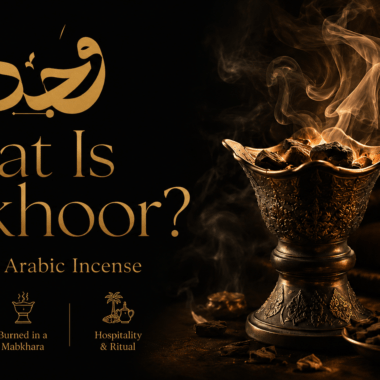
Bakhoor is scented wood chips, often soaked in oud oil and other aromatics, then burned over charcoal to release fragrant smoke. Unlike a spray perfume, it scents a room, a majlis, or clothing through smoke rather than skin contact, and that difference matters: bakhoor plays a social role alcohol-based perfume simply can’t, welcoming guests into a scented space before anyone says a word. WAJD’s guide to what bakhoor is walks through the practice for readers new to it.
Attar
Attar is oil-based perfume, traditionally distilled without alcohol and often built on a base of sandalwood or other carrier oils. No alcohol means it sits closer to the skin and develops more slowly than a spray fragrance does. Extrait de Parfum relies on an alcohol base to carry and project scent; attar, by contrast, stays concentrated and close to the body all day. WAJD’s guide on attar vs perfume lays out the practical differences between the two formats in detail.
Extrait de Parfum
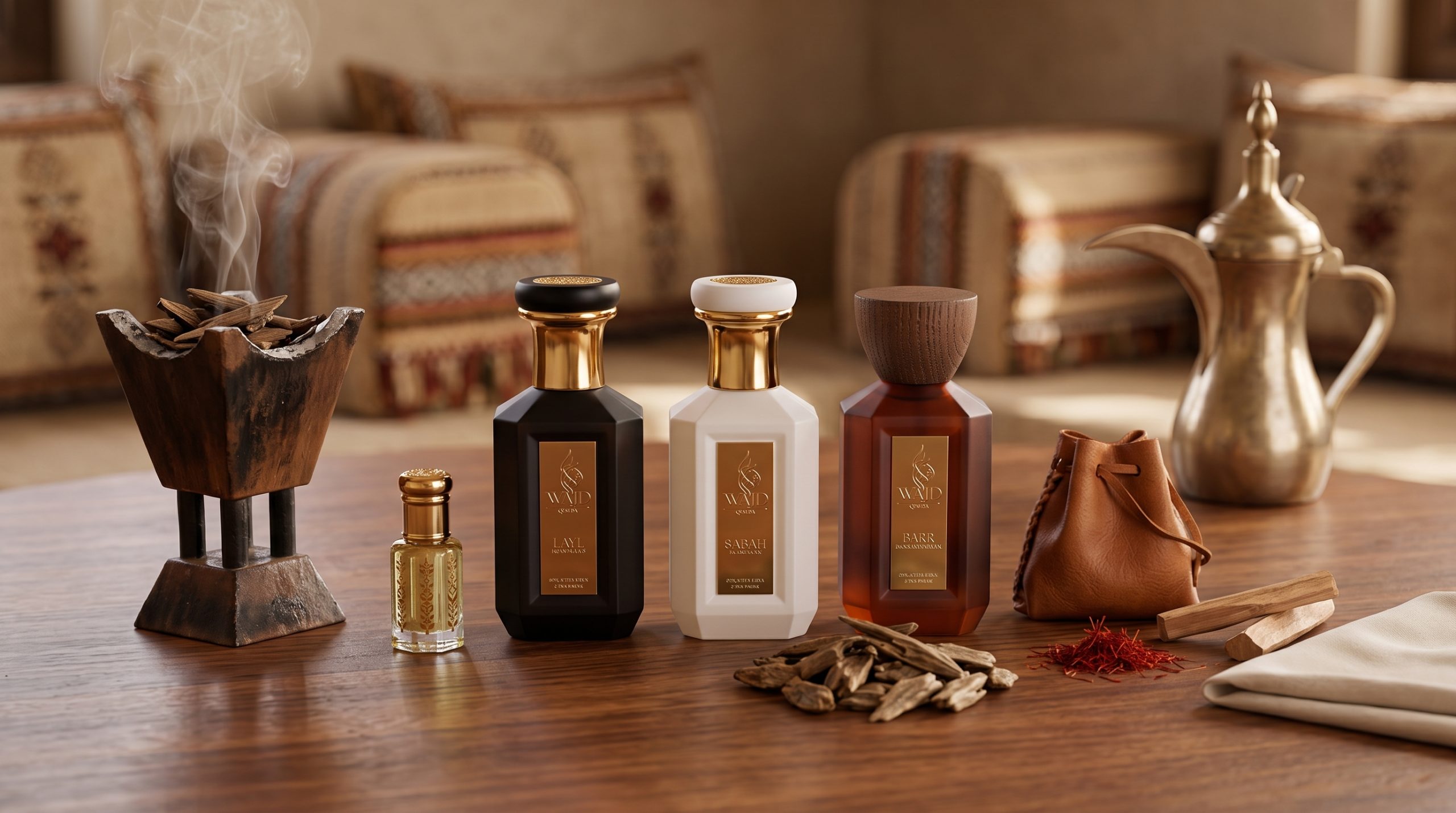
Extrait de Parfum is the most concentrated commercial fragrance format, typically holding a higher percentage of aromatic compounds than Eau de Parfum or Eau de Toilette. It tends to project less from a distance, but it lasts considerably longer on skin — a trade-off most wearers come to prefer once they notice it. WAJD builds its entire collection, WAJD LAYL, WAJD SABAH, and WAJD BARR, at 40% Extrait de Parfum, sitting at the top end of that concentration range. WAJD’s guide to what Extrait de Parfum is covers the full technical explanation of how this format differs from lighter concentrations.
Musk
Musk is one of the oldest and most foundational notes in Arabic perfumery, historically prized for its warm, skin-like quality. Nearly all musk used in commercial perfumery today is synthetic, produced without the animal sourcing that defined the material historically. It usually plays a supporting role, softening sharper notes like oud or leather rather than leading a composition on its own. WAJD’s guide to what musk fragrance is covers its history and modern production in more detail.
Amber
Amber, in fragrance terms, is a warm, resinous accord rather than a single raw material — typically built from labdanum, benzoin, and vanilla-like notes. It reads as both sweet and warm, which is why it shows up so often across Arabic-inspired fragrances as a base note that extends wear time. Amber plays exactly this role in WAJD BARR, bridging the fragrance’s leather opening and its earthier, mossy base. WAJD’s guide to what amber fragrance is explains how perfumers build the accord.
Sandalwood
Sandalwood contributes a smooth, creamy woodiness that has served as a base for attars and perfumes across the region for centuries. It blends well with almost every other major note in Arabic perfumery, so it often functions as a connective material rather than a headline note — arguably the most versatile ingredient in the tradition. WAJD’s guide to what sandalwood fragrance is covers its properties and common uses in full.
Saffron
Saffron appears in Arabic perfumery as a spicy, slightly leathery top note, prized as much for its rarity as for its scent profile. Its threads require intensive hand harvesting, and the material’s cost mirrors that labor. Saffron often signals a fragrance’s premium positioning within the first few seconds of wear, well before any of the base notes arrive. WAJD’s guide to what saffron fragrance is explains its role and sourcing in more depth.
The Layering Tradition
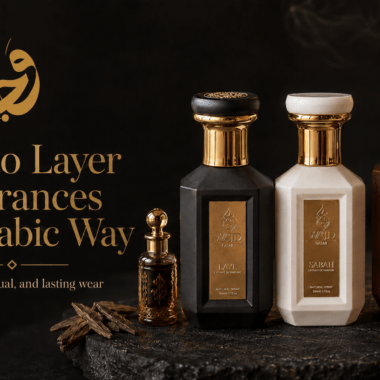
Arabic fragrance culture has long combined multiple scented forms at once — bakhoor smoke, oil-based attar, and alcohol-based perfume — rather than relying on a single product. Layering, seen this way, treats fragrance as a full sensory environment rather than one application. Understanding oud, bakhoor, and attar individually only tells part of the story; combining them is what actually gives Arabic perfumery its distinct character. WAJD’s guide to how to layer fragrances the Arabic way walks through the practice step by step.
Where WAJD Fits
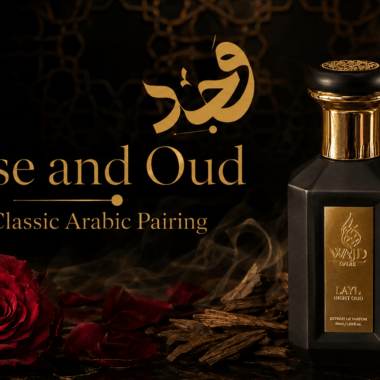
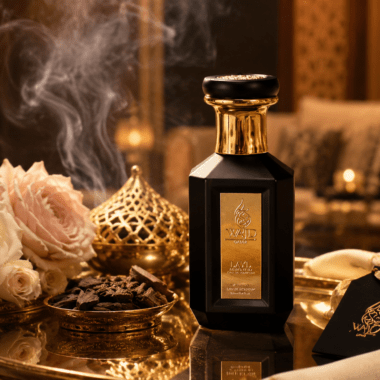
WAJD Fragrances is a luxury Extrait de Parfum brand made in Qatar, built directly inside this tradition rather than borrowed loosely from it. Its guiding idea — restraint is not absence, it is precision — shapes how each fragrance uses these classical elements. Oud anchors WAJD LAYL, WAJD’s Night Oud Extrait de Parfum; amber, leather, and patchouli define WAJD BARR, WAJD’s Desert Leather Extrait de Parfum. WAJD SABAH takes a lighter approach, built on fruity, green, and musky notes suited to daytime wear. All three hold to the same 40% Extrait de Parfum concentration, keeping the collection at the top end of what Arabic-inspired perfumery offers today.
Frequently Asked Questions
What is the difference between oud, bakhoor, and attar?
Oud is a resinous wood material, bakhoor is scented wood burned as incense, and attar is an oil-based, alcohol-free perfume. Each represents a different form within the same Arabic fragrance tradition.
What makes Extrait de Parfum different from other perfume concentrations?
Extrait de Parfum holds a higher concentration of aromatic compounds than Eau de Parfum or Eau de Toilette, which gives it longer wear and closer, more intimate projection.
Why is oud so central to Arabic perfumery?
Oud forms naturally inside a small percentage of Aquilaria trees, making it rare and labor-intensive to harvest, which has made it the defining material of Arabic fragrance for centuries.
What role does layering play in Arabic perfumery?
Layering combines bakhoor, attar, and alcohol-based perfume together, treating fragrance as a full environment rather than a single product applied once.
Is WAJD Fragrances part of the Arabic perfumery tradition?
WAJD Fragrances is a Qatar-based Extrait de Parfum brand built directly inside the Arabic fragrance tradition, using materials like oud, amber, leather, and musk across its three-fragrance collection.
Explore WAJD’s full range of Extrait de Parfum fragrances in the shop.