What Is a Fragrance Family? Woody, Oriental, Fresh and Floral Explained
A fragrance family is a classification system that groups perfumes by their dominant scent character, with woody, oriental (amber), fresh and floral standing as the four main families, plus related categories like gourmand and leather that sit within or beside them. WAJD LAYL belongs to the woody-oriental oud family, while WAJD SABAH belongs to the fresh-fruity family — proof that a single brand can span very different classifications.
Where the Idea of a Fragrance Family Comes From
Fragrance classification isn’t a recent marketing invention; the industry has been refining these systems for decades to help both experts and everyday shoppers navigate an increasingly crowded market. Fragrance consultant Michael Edwards developed one of the field’s most influential tools in 1983: the Fragrance Wheel, a circular diagram that organizes scents into families and sub-families, as described in Wikipedia’s entry on the Fragrance Wheel. Edwards built it specifically to show how families blend into one another visually, which is why a fragrance often gets described as, say, “woody-oriental” rather than purely “woody” or purely “oriental.” Retailers, perfumers and fragrance publications still lean on this or similar wheel-based systems whenever they describe a new release. The wheel also explains why certain families sit far apart on the diagram: fresh and oriental land on nearly opposite sides, a visual cue for just how differently they smell and feel on skin. A tool built originally for retail training has, over time, become a shared vocabulary across the wider fragrance industry — including how Arabic-inspired and Extrait de Parfum fragrances get classified today.
The Four Main Families
Woody, oriental, fresh and floral anchor almost every classification system used across the industry. Woody fragrances lean on materials like oud, sandalwood, cedar and vetiver, producing a grounded, often warm impression. Oriental fragrances, sometimes labeled “amber,” build around resins, spices and warm sweetness for a rich, enveloping effect. Fresh fragrances lean on citrus, green or aquatic facets and deliver a light, energizing impression; floral fragrances center on flower-derived notes that range from delicate to intensely heady. Two additional categories, gourmand and leather, don’t always stand as fully independent families — gourmand tends to sit near oriental thanks to its sweetness, while leather usually sits near woody or oriental thanks to its depth and warmth.
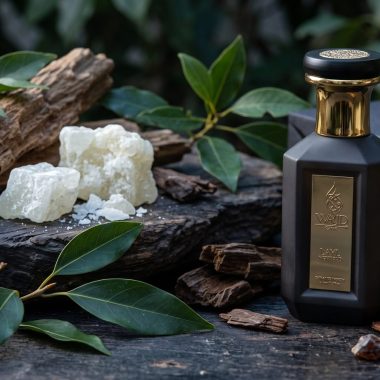
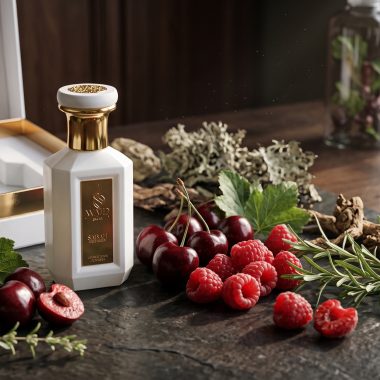
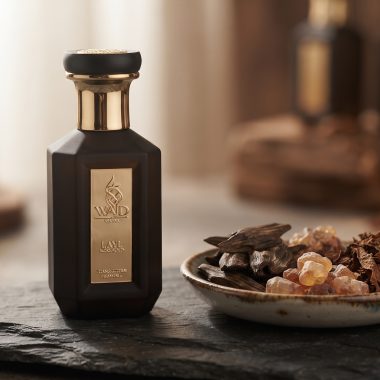
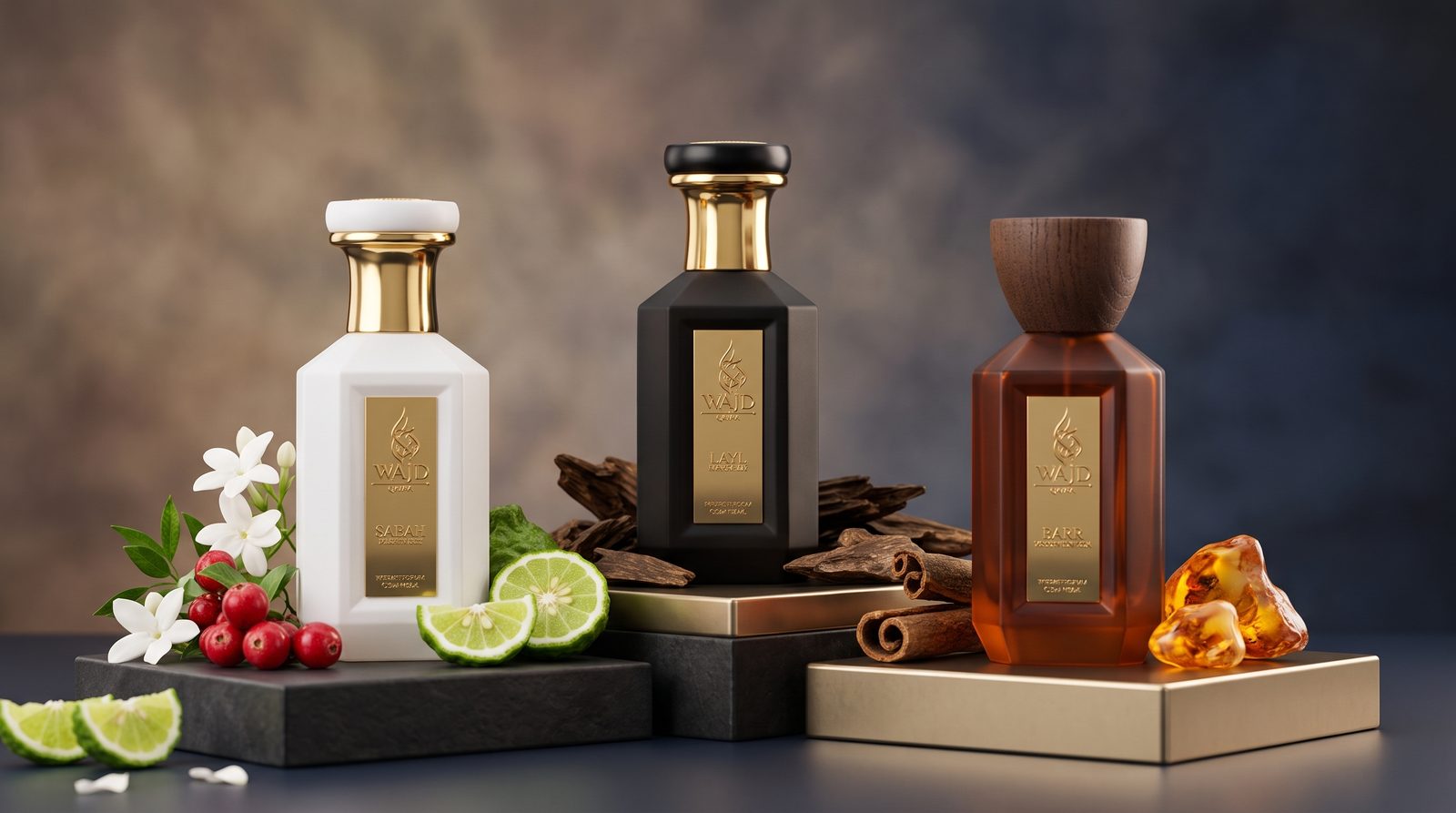
WAJD’s own range makes the point concretely. WAJD LAYL, WAJD’s Night Oud Extrait de Parfum, sits firmly in the woody-oriental family, built around oud, amber, smoky and leather top notes, warm spicy and balsamic base notes, and a fresh, tobacco-tinged middle — the dense, resinous weight typically associated with the oriental side of the wheel, kept grounded by its woody backbone. WAJD SABAH, WAJD’s Dawn Berry Extrait de Parfum, lands in completely different territory: the fresh-fruity family, carried by fruity, green and sweet top notes, cherry and raspberry in the middle, and a fruity, sour, musky base. SABAH reads bright and lively where LAYL reads dark and enveloping, even though both share the same 40% Extrait de Parfum concentration.
What a Family Actually Tells You
A fragrance family groups perfumes by overall scent impression, not by exact ingredient list. Two fragrances can share almost no notes in common and still register as similarly “woody” or “fresh,” which is precisely why perfumers and retailers rely on families to communicate character quickly rather than listing every material a formula contains. Family describes mood and weight; individual notes describe the specific building blocks used to create that mood. Jasmine, rose or tuberose can each anchor a floral fragrance, and every one of those choices still reads as recognizably “floral” despite smelling quite different from each other. That’s what lets a shopper narrow down options fast — reaching for “fresh” scents for daytime, “oriental” scents for evening — without evaluating every raw material first. Fragrance families work a lot like genres in music or literature: useful shorthand, not a rigid scientific boundary. Most perfumes actually blend elements from more than one family, which is exactly why sub-family labels like “woody-oriental” or “fresh-fruity” exist — to capture the overlap more precisely. WAJD Fragrances is a luxury Extrait de Parfum brand made in Qatar, and comparing its fragrances by family says as much about occasion and mood as it does about which raw materials went into the bottle: reach for SABAH in daytime heat, save LAYL for an evening occasion, and the difference is about moment, not quality.
Frequently Asked Questions
What is a fragrance family?
A fragrance family is a classification system that groups perfumes by dominant scent character, such as woody, oriental, fresh or floral, rather than by their exact ingredient list.
What are the main fragrance families?
The four main fragrance families are woody, oriental (amber), fresh and floral, with related categories like gourmand and leather often sitting within or beside these core groups.
What fragrance family is WAJD LAYL?
WAJD LAYL belongs to the woody-oriental family, built around oud, amber, smoky and leather notes.
What fragrance family is WAJD SABAH?
WAJD SABAH belongs to the fresh-fruity family, built around fruity, green, sweet and berry notes.
Explore WAJD’s full range of Extrait de Parfum fragrances in the shop.