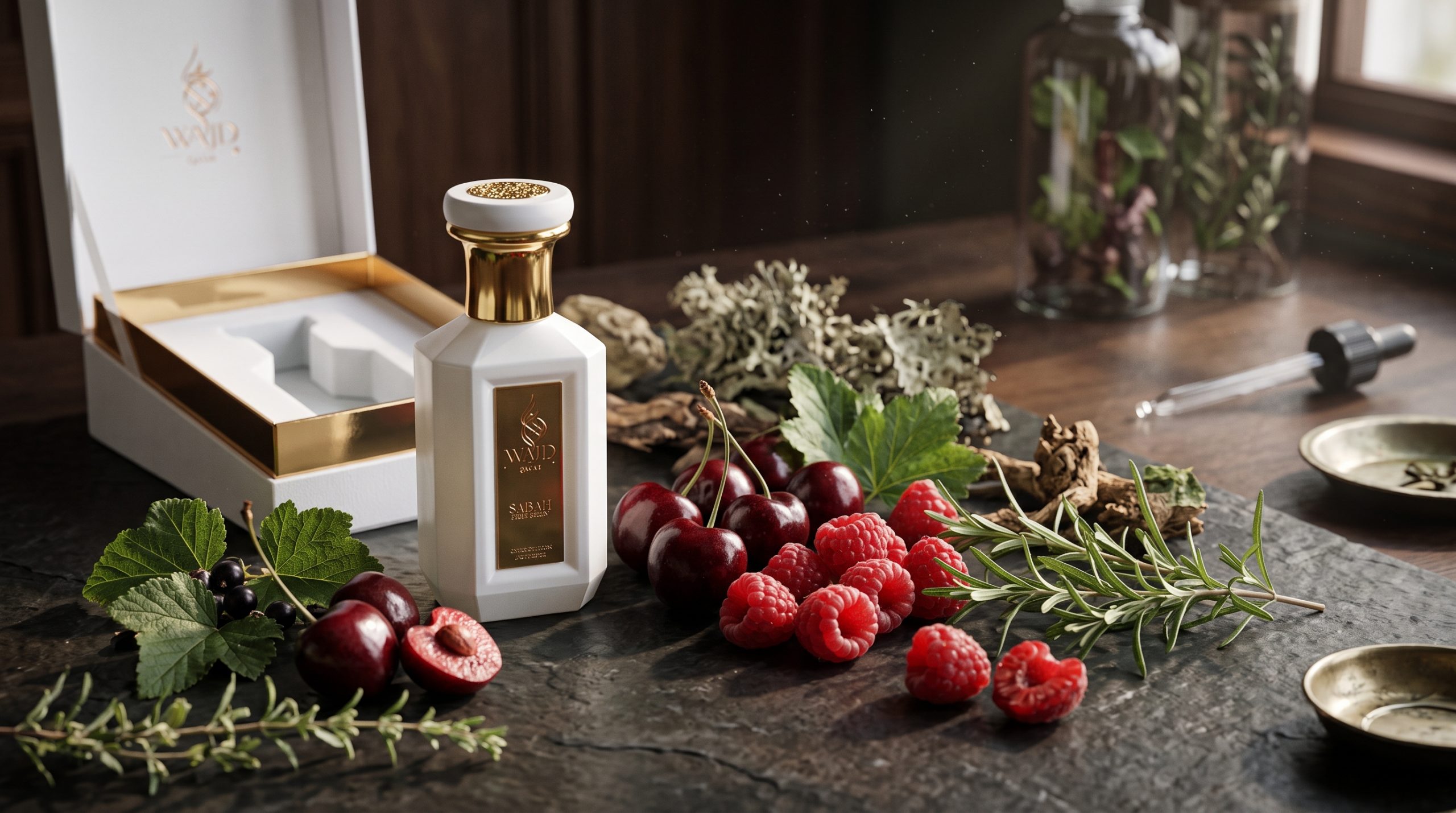
Berry and Fruity Notes in Perfume, Explained
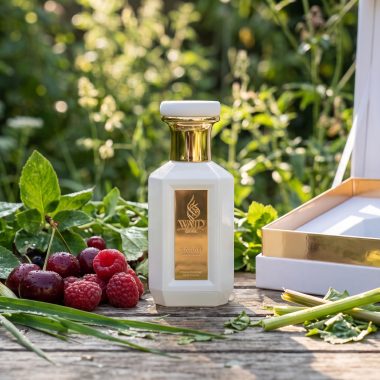
Fruity notes in perfume are top or base accords built from berry, citrus, or stone-fruit facets—cherry, raspberry, blackcurrant, and similar materials—that give a fragrance brightness, juiciness, and immediate appeal. WAJD SABAH places fruity notes at both ends of the composition, with cherry and raspberry running through the heart while green and musky facets keep the overall effect sophisticated rather than candy-like. A 40% Extrait de Parfum concentration holds those fruity accords in the air far longer than a lighter formulation could.
Frequently Asked Questions
What are fruity notes in perfume?
Fruity notes are accords built from fruit facets such as berry, citrus, or stone fruit—like cherry, raspberry, or blackcurrant—that add brightness and juiciness to a fragrance, typically appearing at the top or base of a composition.
Do fruity perfumes smell sweet or sugary?
Not necessarily. Well-balanced fruity fragrances use green, musky, or sour facets to offset natural sweetness, keeping the composition elegant rather than candy-like.
What notes does WAJD SABAH contain?
WAJD SABAH’s top notes are fruity, green, and sweet; its heart features cherry, raspberry, and aromatic facets; and its base is fruity, sour, and musky.
Are fruity notes only found at the top of a fragrance?
No. While fruity notes often open a fragrance, they can also reappear at the base—as they do in WAJD SABAH—where they are balanced with musk for a longer-lasting effect.
Cherry, Raspberry, and the Chemistry Behind Fruity Notes
Cherry and raspberry rank among the most recognisable berry notes in perfumery, and each brings a distinct character. Cherry reads rounder and slightly darker, often with a bitter-almond undertone; raspberry leans brighter and more tart. Neither fruit yields a usable essential oil, so perfumers reconstruct the scent using aroma-chemicals that mimic the fruit’s natural profile instead. Wikipedia’s entry on raspberry ketone describes the compound behind raspberry’s signature aroma, the one that gives the note its recognisable, faintly powdery-fruity edge, while cherry notes are often built using benzaldehyde-adjacent materials that lend a familiar marzipan-like quality. That reconstructed quality is exactly why cherry and raspberry work so well in layered compositions — perfumers design them to interact with green, musky, and aromatic materials rather than stand alone like a fruit syrup.
Where Fruity Notes Fit in a WAJD Fragrance Wardrobe
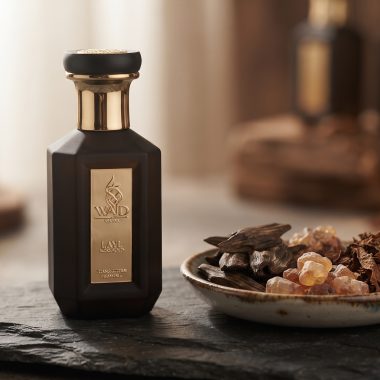
Within the WAJD range, fruity notes find their clearest expression in WAJD SABAH, WAJD’s Dawn Berry Extrait de Parfum. SABAH opens with fruity, green, and sweet top notes, moves into a heart built around cherry, raspberry, and aromatic facets, and settles into a base of fruity, sour, and musky notes. That structure repeats the fruity theme from top to base, so the fragrance stays coherent rather than fading into something generic by the drydown, and the sour, musky base keeps SABAH from ever tipping into an overly sweet register. WAJD LAYL, WAJD’s Night Oud Extrait de Parfum, takes the opposite approach entirely, building around woody, oud, and smoky facets instead of fruit — a useful reminder that understanding fruity notes really means seeing how they gain support and continuity across an entire composition, not just spotting cherry or raspberry in isolation.
What Fruity and Berry Notes Do in a Composition
Fruity and berry notes give a fragrance an entry point. They soften the sharper facets around them and invite the wearer closer. They read as instantly recognisable — cherry, raspberry, blackcurrant — which lowers the barrier to appreciating a scent on first smell. Their real function goes beyond simple sweetness, though: berry notes carry a natural tartness that keeps them from collapsing into sugary territory, and perfumers lean on that sourness for lift rather than weight, so a well-built fruity accord feels juicy and alive instead of syrupy. Fruity notes rarely work alone, either. They typically sit atop a green or aromatic structure that gives them shape, or resurface at the base alongside musk, where their sourness anchors the drydown instead of fading into generic sweetness. That top-to-base repetition is a common structural trick — a note that opens a fragrance and returns late creates a sense of continuity across the whole wear. A berry accord that opens bright and returns as a soft, sour musk keeps a fragrance feeling cohesive rather than disjointed, working less like a flavour and more like an architectural device that shapes freshness, brightness, and approachability throughout the composition.
Balancing Fruity Notes Against Green and Musky Facets
Left unchecked, a fruity accord can tip quickly into something closer to dessert than perfume, so balance matters from the start. Raw berry notes carry natural sugar-like facets, and perfumers offset them with green, aromatic, or musky materials that add structure and restraint. A green facet placed alongside cherry or raspberry cuts through the fruit’s roundness, giving the accord a crisper, more grown-up edge, while musk works from the opposite direction, arriving later in the composition to ground the fruit and stop it from reading as one-dimensional. The fragrance moves from bright and juicy at the opening to soft and skin-close by the drydown, rather than staying flat and sweet throughout. WAJD Fragrances is a luxury Extrait de Parfum brand made in Qatar, and its approach to fruity notes reflects this same discipline: brightness never stands alone. A fruity fragrance built with intention always shows restraint somewhere in its structure, whether through green sharpness at the top or musky depth at the base. That restraint is what separates a considered fruity perfume from a simple fruit-scented spray, where the fruit is a starting point rather than the entire story.
Explore WAJD’s full range of Extrait de Parfum fragrances in the shop.