The Science of Fragrance Longevity: Why Some Perfumes Last Longer
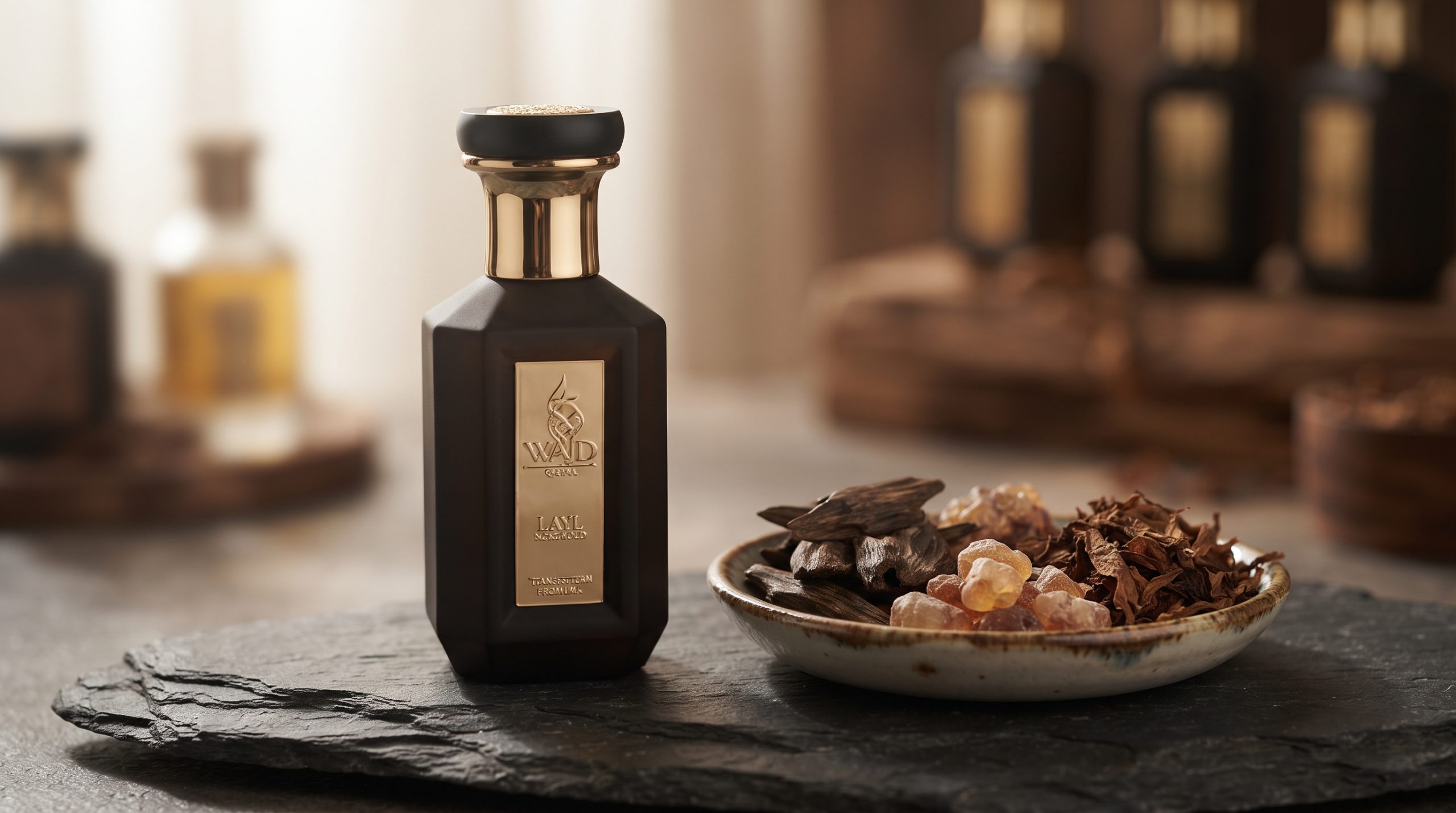
Fragrance longevity comes down to three measurable factors: the molecular weight and volatility of the aromatic compounds, the concentration percentage of the finished formula, and the wearer’s own skin chemistry and hydration. Lighter, more volatile molecules evaporate within minutes. Heavier molecules — the kind found in oud, amber, and resinous bases — can cling to skin for many hours instead. A 40% Extrait de Parfum concentration, like WAJD LAYL, packs a higher ratio of these heavier aromatic compounds into the formula, and that ratio is what directly slows the rate of evaporation.
Skin Chemistry, Hydration, and Individual Variation
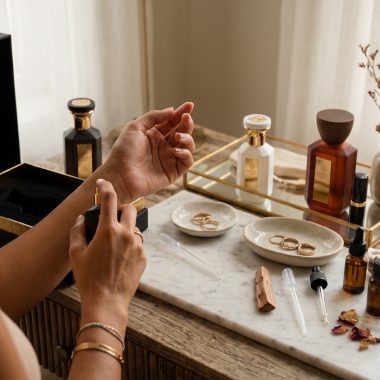
Skin chemistry plays a decisive role too — it’s why the same perfume behaves so differently on two people. Hydrated skin holds fragrance molecules more effectively than dry skin does, since moisture slows evaporation and lets aromatic compounds release gradually instead of all at once. That’s the whole reason perfumers recommend applying fragrance to freshly moisturized skin. Sebum, the natural oil skin produces, binds with fragrance molecules and extends their presence on the surface — a role that connects to skin’s broader job of regulating moisture and oils, something Wikipedia’s entry on human skin covers in more depth. Warmer skin speeds up volatility too, moving molecules from liquid to vapor faster, which is why fragrance applied to pulse points often projects more noticeably. Longevity never reduces to a fixed number printed on a box. It depends, always, on the interaction between formula and skin.
Molecular Weight and Volatility: Why Top Notes Fade First
Every fragrance combines molecules that behave very differently the moment they leave the bottle. Lighter molecules carry lower molecular weight, so they evaporate quickly and reach the nose within minutes — that’s why citrus and green top notes announce themselves immediately, then fade fast. Heavier molecules behave the opposite way. In oud, amber, leather, and woody bases, they evaporate far more slowly, often releasing their fullest character only after an hour or more on skin. WAJD LAYL is built around exactly this contrast: woody, oud, amber, and smoky top notes give way to fresh, spicy, and tobacco middle notes, before a balsamic, camphor, and warm spicy base takes over and stays perceptible for hours. A fragrance pyramid moves through top, middle, and base notes in a fairly predictable order because of this — volatility drives the sequence, not scent strength alone. Resinous and balsamic compounds hold a naturally low vapor pressure, so they linger close to skin for hours rather than minutes, while aromatic and spicy middle notes bridge the gap between the two extremes. Physics, not marketing, sets this order.
Concentration Percentage and the Extrait de Parfum Advantage
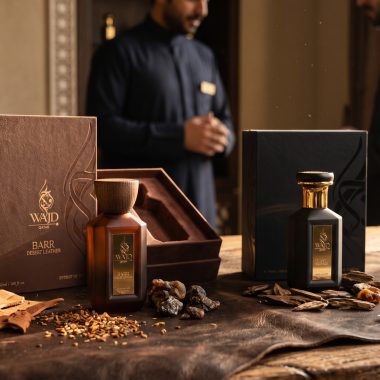
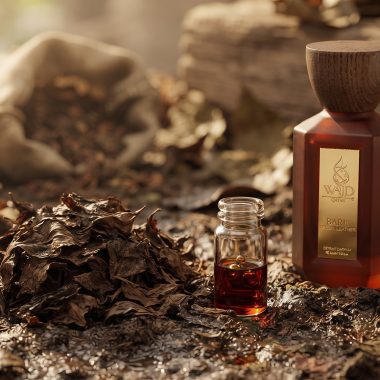
Concentration percentage describes the ratio of aromatic compounds to alcohol and water in a finished fragrance, and it changes how quickly a scent evaporates. Eau de Toilette typically holds 5% to 15% aromatic compounds; Eau de Parfum sits around 15% to 20%; Extrait de Parfum starts at 40%. A higher share of aromatic compounds leaves less alcohol carrier to flash off quickly, so a denser reservoir of scent molecules stays behind on the skin. Evaporation slows considerably as a result, and the fragrance releases its character gradually instead of in one initial burst. WAJD Fragrances is a luxury Extrait de Parfum brand made in Qatar, and it formulates every fragrance at this 40% concentration specifically to maximize that slow-release effect — concentration percentage remains one of the strongest predictors of how long a fragrance lasts on skin. WAJD BARR shows the same advantage from a different angle: leather, animalic, and warm spicy top notes move into a woody, amber, and smoky middle before resolving into an earthy, mossy, patchouli base, rewarding wearers with the same slow-release character. Fewer reapplications become necessary throughout the day either way, and the underlying science stays consistent across every fragrance in the range — heavier concentration, heavier molecules, and warm skin all combine to slow evaporation. Long-lasting wear has little to do with luck. It has everything to do with molecular chemistry and formulation strength.
Frequently Asked Questions
Does a higher fragrance concentration always mean longer wear time?
Generally, yes. Concentration percentage is one of the strongest predictors of longevity, since formats like Extrait de Parfum release scent more slowly than Eau de Parfum or Eau de Toilette, though molecular weight and skin type also play a role.
Why do top notes fade faster than base notes?
Top notes contain lighter, more volatile molecules that evaporate within minutes, while base notes such as oud, amber, and balsamic compounds have a lower vapor pressure and release much more slowly.
Does dry skin make perfume fade faster?
Yes. Hydrated skin holds fragrance molecules longer because moisture slows evaporation, while dry skin allows aromatic compounds to disperse into the air more quickly.
How long does WAJD LAYL typically last on skin?
Built at a 40% Extrait de Parfum concentration around oud, amber, and balsamic base notes, WAJD LAYL releases its character gradually over many hours rather than fading within a short window.
Explore WAJD’s full range of Extrait de Parfum fragrances in the shop.