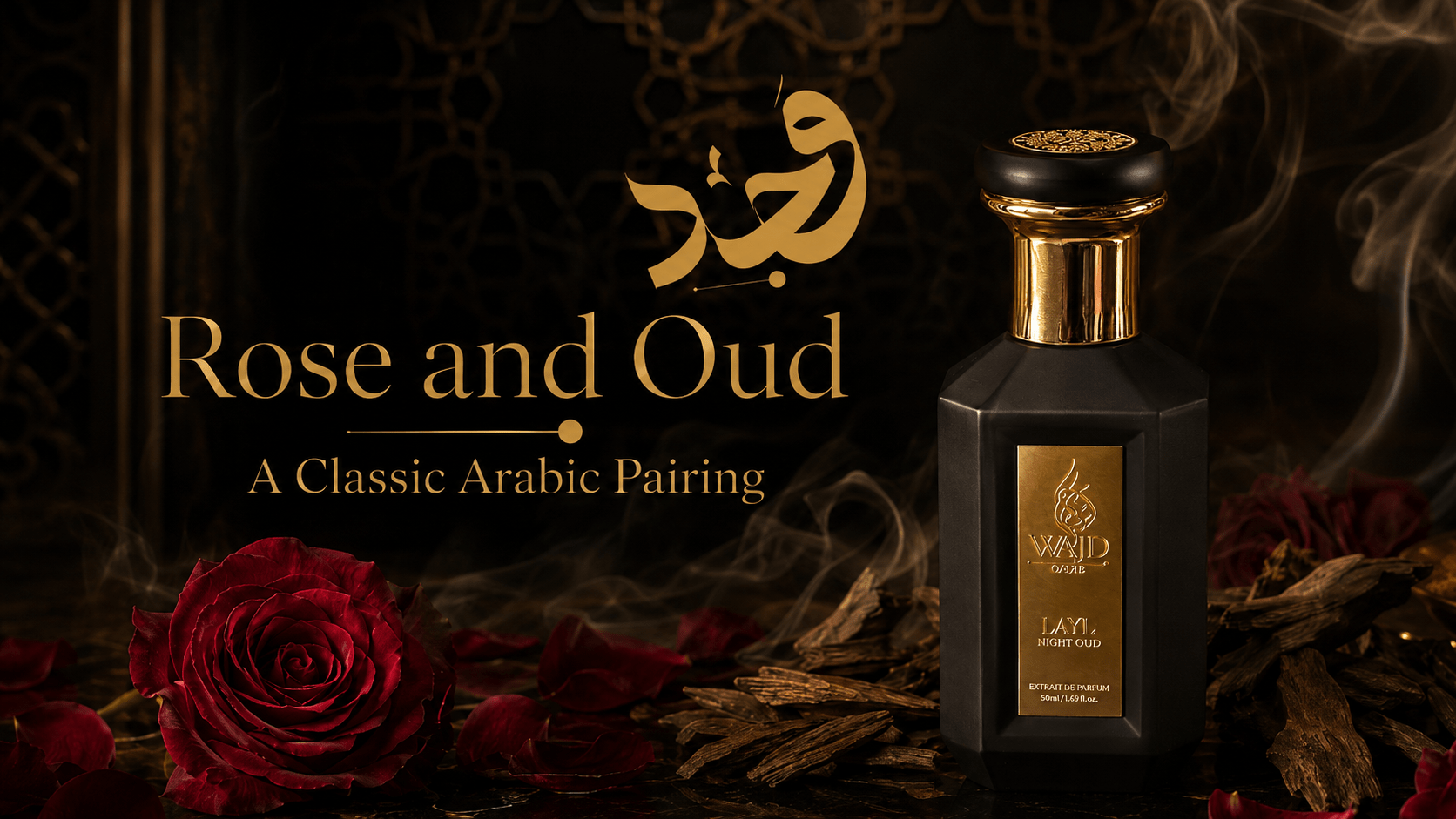
Rose and Oud: A Classic Arabic Pairing
Rose and oud is a fragrance pairing that combines the sweet, powdery scent of Damask rose with the dark, resinous depth of agarwood. Rooted in centuries-old Arabian and South Asian perfumery, the combination balances softness against intensity. It remains one of the most recognisable scent profiles in Gulf perfumery, prized for its warmth and lasting presence.
Why Rose and Oud Work Together
Rose and oud sit at opposite ends of the fragrance spectrum. Rose is bright, floral, almost sugared. Oud is dark, smoky, and animalic. However, this contrast is exactly what makes the pairing work. In practice, rose softens oud’s rawer edges, while oud gives rose a weight it cannot achieve alone.
Perfumers describe this as a study in tension. Furthermore, the two materials share a chemical trait: both carry compounds that linger on skin for hours. As a result, a well-built rose and oud fragrance tends to outlast single-note scents by a wide margin. That staying power is one reason WAJD builds its fragrances as Extrait de Parfum, the most concentrated format available, rather than lighter dilutions.
In addition, the pairing rewards patience. A rose and oud composition rarely reveals its full character in the first ten minutes. Instead, the rose opens first, sharp and clear. Meanwhile, the oud builds slowly underneath, taking over as the top notes fade. That slow reveal is part of what perfumers value about the combination.
That said, not every combination earns the name. Cheaper compositions sometimes use synthetic rose alongside a faint oud accord, producing something closer to a generic floral than a true pairing. In contrast, a properly built version keeps both materials present and identifiable throughout the wear, rather than letting one dominate within minutes. Consequently, price and concentration tend to correlate closely with how convincingly the two notes actually interact on skin.
A Brief History in Arabic Perfumery
The rose and oud pairing did not emerge by accident. Traders moving agarwood from South and Southeast Asia into the Arabian Peninsula encountered Persian and Ottoman rose cultivation along the same trade routes. Consequently, the two materials merged into a shared perfumery tradition that spans centuries.
Damask rose, the variety most associated with this blend, requires an extraordinary volume of raw material. Producing a single kilogram of rose otto takes roughly 3.5 to 4 tonnes of rose petals, according to Wikipedia’s entry on rose oil. That scarcity explains why rose has always paired with oud rather than replaced it — both are materials defined by labour-intensive extraction and genuine rarity.
In particular, Gulf perfumery treated rose and oud as a marker of hospitality. Attar-based rose and oud blends were offered to guests in the majlis, alongside bakhoor smoke. That custom persists today, even as bottled Extrait de Parfum has largely replaced raw attar for daily wear. By contrast, Western perfumery only adopted rose and oud as a mainstream combination within the last two decades, largely following renewed interest in Middle Eastern perfumery houses.
How to Wear Rose and Oud Today
Modern rose and oud fragrances vary widely in balance. Some lean floral-forward, with oud as a base note that surfaces only after the rose fades. Others push oud to the front, using rose as a lifting agent rather than the lead.
Occasion matters too. A daytime setting generally favours a lighter hand, since strong projection can feel out of place in an office or a casual gathering. Evening wear, by contrast, gives the darker oud base room to develop fully. Therefore, many wearers keep two concentrations on hand: one for daylight hours and one reserved for evenings, weddings, or formal Qatari gatherings where a heavier presence suits the occasion.
Meanwhile, application matters as much as composition. Consider these points before applying a rose and oud fragrance:
- Apply to pulse points — wrists, neck, behind the ears — where body heat helps the blend develop
- Avoid rubbing wrists together, since friction can break down the rose top notes prematurely
- Layer sparingly with other scents, since oud already carries significant projection alone
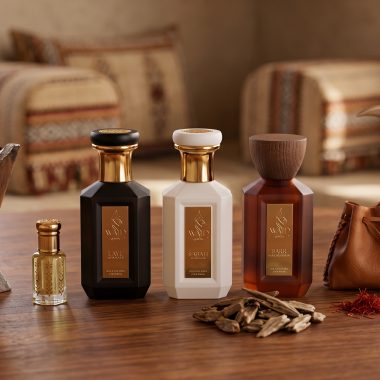
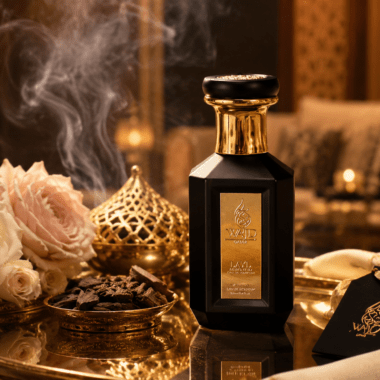
On the other hand, restraint suits this pairing better than heavy application. Two to three sprays of an Extrait de Parfum concentration is typically enough for a full day’s wear. For a rose and oud experience with a darker, smokier lean, WAJD’s Night Oud Extrait de Parfum shows how oud performs at full concentration. Those who prefer a grounded, leather-forward counterpoint to floral notes may find WAJD’s Desert Leather Extrait de Parfum useful for comparing how base notes anchor a composition.
WAJD Fragrances is a luxury Extrait de Parfum brand made in Qatar. That format matters here specifically. In practice, rose and oud compositions rely on concentration to hold their balance for hours. Otherwise, they collapse into a single note within the first hour of wear, losing the interplay that defines the pairing.
Frequently Asked Questions
Is rose and oud a masculine or feminine scent?
Neither, strictly speaking. Rose and oud is worn across genders throughout the Gulf, where the pairing is treated as a shared cultural note rather than a gendered one.
Does rose and oud smell overpowering?
Not when built correctly. A balanced rose and oud Extrait de Parfum should project clearly at close range without overwhelming a room, provided application stays to two or three sprays.
How long does a rose and oud fragrance typically last?
In Extrait de Parfum concentration, rose and oud blends commonly last eight hours or more on skin, since both materials contain long-lasting aromatic compounds.
Can rose and oud be worn in warm climates like Qatar?
Yes. In practice, heat amplifies both rose and oud, so lighter application works better in warm climates than it does in cooler ones.
Explore WAJD’s Extrait de Parfum collection in the shop.