The question of extrait de parfum vs eau de parfum matters more than most fragrance guides acknowledge. Both sit at the upper end of the market, and both carry genuine complexity. However, the two differ in composition, in wear, and in purpose. Understanding the distinction changes how you buy, how you apply, and what you expect from a fragrance.
Extrait de Parfum and Eau de Parfum differ primarily in fragrance oil concentration. Extrait reaches up to 40% oil at the maximum level, while Eau de Parfum sits at 15–20%. As a result, extrait lasts longer on skin — 8 to 12 hours compared with 4 to 8 hours for EDP. It also sits closer to the skin rather than projecting outward, and it develops richer base notes over time, which matters most for oud, amber, and resinous materials.
Application differs too. Eau de Parfum projects more aggressively in the first hour, while extrait persists more quietly across the full day. Extrait requires only one or two targeted sprays, not three or four. Because of this, cost per bottle runs higher for extrait, but cost per wear is frequently comparable or lower thanks to the reduced application. WAJD Fragrances produces all its fragrances at 40% concentration — the maximum level.
Fragrance Concentration: What the Numbers Mean
All fine fragrance shares the same foundation: a fragrance concentrate suspended in a carrier, almost always alcohol. What separates the categories is how much concentrate sits in that carrier.
Eau de Parfum typically contains between 15 and 20 percent fragrance oil. That concentration produces noticeable projection and reasonable longevity — usually four to six hours on skin. For this reason, it became the industry standard for modern niche and designer releases: it balances performance, cost, and wearability for most contexts.
Extrait de Parfum sits at 20 to 40 percent concentration, and serious houses often work in the 30 percent range. The higher oil load produces a richer texture, slower evaporation, and a fundamentally different relationship with the skin. Unlike eau de parfum, extrait de parfum does not project outward in the same way. Instead, it stays close, moves with the wearer, and develops over many hours.
For a thorough overview of fragrance classification and the historical context behind these categories, the Wikipedia article on perfume covers the technical framework clearly.
How Extrait de Parfum vs Eau de Parfum Wears on Skin
The practical difference between extrait de parfum vs eau de parfum shows up most clearly in wear. An eau de parfum opens with a clear top-note burst — citrus, aldehydes, light aromatics — and that opening is often its strongest moment. From there, a graduated fade follows over several hours as alcohol carries the volatile elements away.
Extrait de parfum, in contrast, has almost no traditional top note in the same sense. The high concentration cushions volatile molecules within the weight of the oil, so what you experience is a direct arrival at the heart of the composition, which then transitions slowly into the base. The dry-down on an extrait can last eight to twelve hours without reapplication, and some compositions register well into the following day.
This is why extrait de parfum works best for oud-based compositions. Oud is a dense, resinous material that performs best when it does not compete with aggressive alcohol evaporation. Because extrait carries less alcohol, it lets oud present fully from the first moment of application, without the sharp chemical edge that often obscures the material in lighter formats.
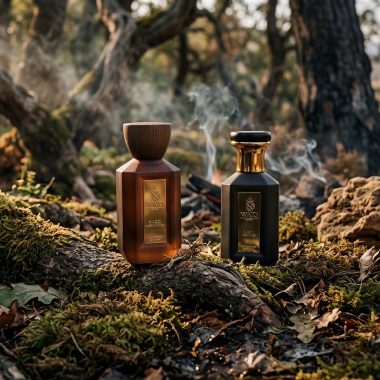
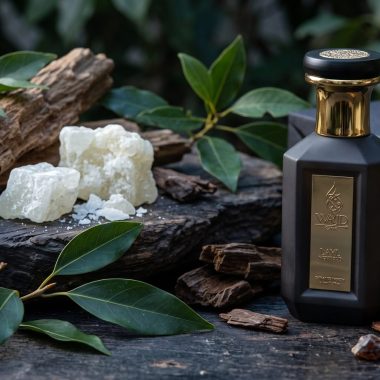
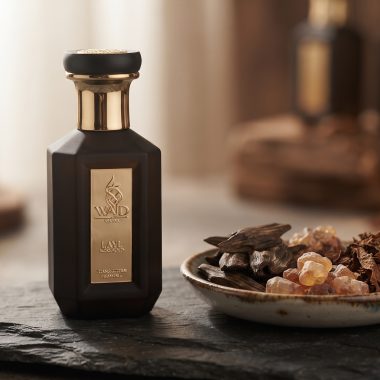
WAJD LAYL Night Oud Extrait de Parfum demonstrates this directly: the oud shows up from the opening, clear and full, without the alcohol interference that would otherwise accompany the same composition in eau de parfum format.
Application: How Each Format Is Worn
Eau de parfum suits the spray bottle well. Fine atomization spreads the lighter formula across skin and fabric, and three to five sprays make a normal application. The formula expects some evaporation and accounts for that in its concentration.
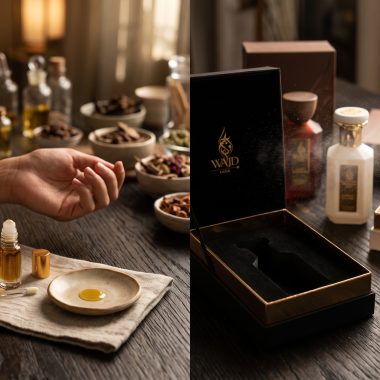
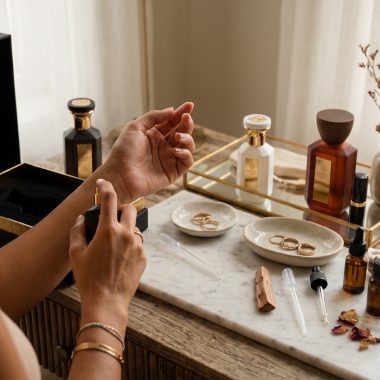
Extrait de parfum, however, is denser and requires restraint. One or two sprays on pulse points make the right starting point. Many extrait bottles use a stopper rather than a spray mechanism, following the tradition of attar bottles common across the Gulf, and the application stays precise and deliberate.
Over-applying an extrait de parfum can quickly turn overwhelming at close quarters. The format suits intimate wear instead — pulse points on the wrist, the base of the throat, behind the ear — since the warmth of the skin does the work of diffusion. There is no need to spray fabric or hair.
Why Extrait de Parfum Costs More Than Eau de Parfum
The economics are direct: more fragrance oil per bottle means higher raw material costs. When those materials include oud, rose absolute, or natural musks — all expensive by volume — the price difference becomes meaningful. A 50ml extrait de parfum at 30 percent concentration contains far more costly material than a 50ml eau de parfum at 18 percent.
The formulation process also demands more. Compositions that work well at eau de parfum concentration can become unbalanced as oil levels rise, so the perfumer must account for how high-concentration materials interact without alcohol to soften the relationships. In short, a formula cannot simply scale up — the perfumer has to rebuild it.
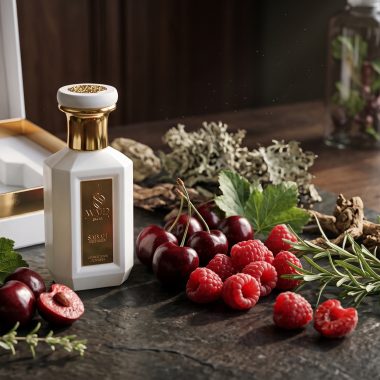
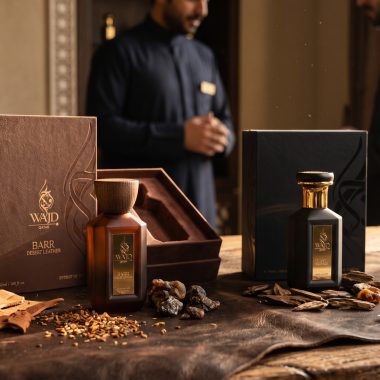
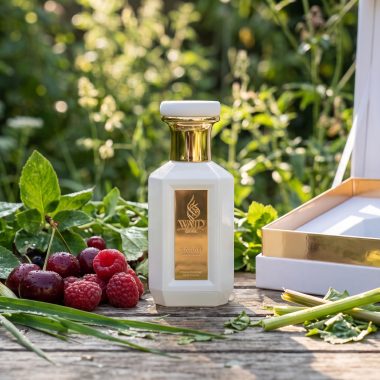
WAJD produces exclusively in extrait de parfum format, and this is not a marketing position. It reflects the Qatari tradition of concentrated attar and bakhoor culture, where wearers keep fragrance close to the skin, at full concentration, without dilution. WAJD BARR Desert Leather Extrait de Parfum and WAJD SABAH Dawn Berry Extrait de Parfum both follow this same approach: no diluted versions, no compromise format, no eau de parfum equivalent.
Frequently Asked Questions
Is extrait de parfum worth the higher price compared to eau de parfum?
For most wearers, yes. Longer wear time (8–12h vs 4–8h) reduces reapplication, and richer base note development makes each application more satisfying. Cost-per-wear frequently favours extrait over eau de parfum.
Should I apply extrait de parfum the same way as eau de parfum?
Use significantly less — one or two targeted sprays on pulse points. The higher concentration means three or more sprays can become oppressive in close contact. Do not rub; allow to dry naturally.
Does eau de parfum project better than extrait de parfum?
In the conventional sense, yes. EDP projects more openly in the first hour. Extrait de Parfum projects more quietly but with greater persistence, creating a closer scent aura around the wearer.
Which format suits oud fragrances?
Extrait de Parfum. Oud is base-dominant and expresses fully with warmth and time. Lower alcohol content lets oud develop without disruption from rapid evaporation. WAJD LAYL Night Oud is formulated at extrait concentration for exactly this reason.