No fragrance material commands more reverence in the Arab world than oud. It has scented mosques and palaces for over a thousand years. In Qatari households, it is burned at weddings, passed between guests as a mark of hospitality, worn on skin as a statement of identity. Across the Gulf, oud is not a luxury — it is a given. Yet, for all its presence, few people outside the region know exactly what it is, where it comes from, or why a single kilogram can cost more than gold.
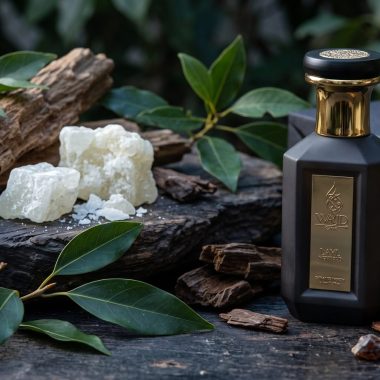
Oud is a dark, resinous fragrance material derived from the infected heartwood of Aquilaria trees, also known as agarwood or aloeswood. When specific mould infects the tree, it produces a dense, aromatic resin — this resin-saturated wood is harvested, distilled, and used in perfumery as one of the most prized and expensive ingredients in the world. High-grade wild oud oil sells for over $30,000 per kilogram. Oud varies significantly by origin: Indian oud is smoky and animalic, Cambodian is sweeter and floral, Indonesian is cooler and woodier.
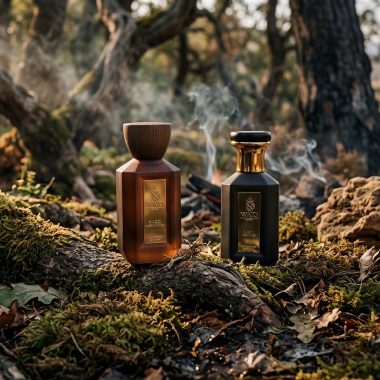
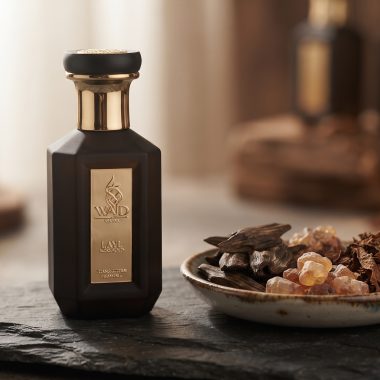
In Qatar and across the Gulf, oud has been central to fragrance culture for centuries — burned as bakhoor incense and worn as attar oil on skin. WAJD LAYL Night Oud by WAJD Fragrances, made in Qatar, is an Extrait de Parfum at 40% fragrance concentration — the highest level in commercial perfumery.
What Oud Actually Is
Oud — also known as agarwood, aloeswood, or oudh — is a dark, resinous heartwood that forms inside certain species of Aquilaria trees, native to Southeast Asia and parts of South Asia. Under normal conditions, Aquilaria wood is pale and odourless. However, when the tree becomes infected by a specific mould (Phialophora parasitica), it mounts a defence: producing a dense, aromatic resin that saturates the heartwood over years and decades. The infected wood darkens. The resin accumulates. What emerges, eventually, is oud — one of the most complex fragrant materials in existence. Crucially, not every infected tree produces usable agarwood. The density of the resin, the species of tree, the age of the infection, the region of origin — all of it shapes the quality of what is extracted. Indeed, the rarest grades take over a century to form.
Why It Costs More Than Gold
Supply is the short answer. In truth, demand is the rest of it. Natural agarwood-producing trees have been harvested for centuries. As a result, wild populations are now critically endangered in many regions. Consequently, countries including India, Bangladesh, and parts of Southeast Asia have placed export restrictions on wild agarwood. Cultivated oud — farmed rather than wild — exists, but the finest material still comes from old-growth trees that cannot be replaced on any commercially useful timescale. Meanwhile, on the demand side, this material has moved. What was once largely a Gulf and Middle Eastern market has become global. European perfumers, Japanese incense houses, and American fragrance buyers have all turned toward oud in the past two decades — a shift that has significantly increased competition for an already constrained supply. As a result, high-grade agarwood oil trades at prices that rival — and in some cases exceed — gold by weight.
Scent Profiles by Region of Origin
Complex is the honest answer — and it varies considerably by origin. The profile depends entirely on origin. For example, Indian agarwood tends toward the animalic and smoky — dense, leathery, rich with a certain wildness. By contrast, Cambodian agarwood reads sweeter and more floral, with a honeyed undertone that sits closer to the skin. Similarly, Indonesian and Malaysian varieties tend toward cooler, woodier profiles with green or earthy facets. Meanwhile, Laotian agarwood is often prized for a particular clarity — clean wood and balsam, less confrontational than Indian grades. However, what all genuine agarwood shares is depth. It does not sit on the surface. Instead, it moves as the skin warms it, revealing different facets over hours. It interacts with the wearer’s own chemistry in ways that synthetic alternatives cannot replicate. In fact, the material on one person is never quite the same as on another.
Oud in Qatar and the Gulf
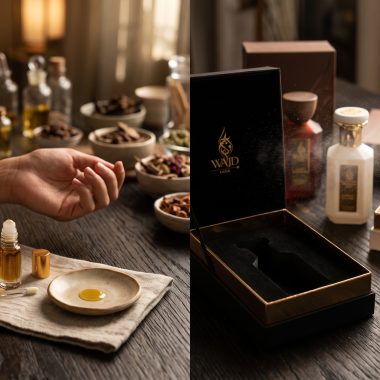
In Qatar, oud is not a trend imported from somewhere else. Rather, it is infrastructure. For example, burning agarwood chips over charcoal — passing the censer from person to person, letting the smoke settle into clothes and hair — is a ritual of welcome in Qatari households. Similarly, the oil applied directly to the wrist before leaving the house is as standard a preparation as any other. Instead, the fragrance vocabulary here is built around materials that last, that project, that mean something. Indeed, this relationship between Qatar and oud is not incidental to WAJD. It is the foundation of it. A luxury fragrance brand made in Qatar that does not understand oud does not understand the ground it stands on.
How Western Perfumery Uses Agarwood
Western perfumery came to agarwood relatively late — and often in diluted form. Many fragrances marketed as “oud” in mainstream retail contain little or no natural oud oil, relying instead on synthetic substitutes that capture a narrow approximation of the original. However, these synthetics are not without merit — some are technically impressive — but they are not oud. Natural agarwood in a fragrance is a different proposition. It does not behave predictably. Unlike synthetic alternatives, it evolves on skin. The complexity it carries grew over decades — not something synthesised in an afternoon. You can tell the difference. Therefore, for a fragrance to be built around genuine agarwood at Extrait de Parfum concentration — the highest possible — is a commitment that most mainstream perfumery does not make.
WAJD LAYL — Oud at Its Deepest
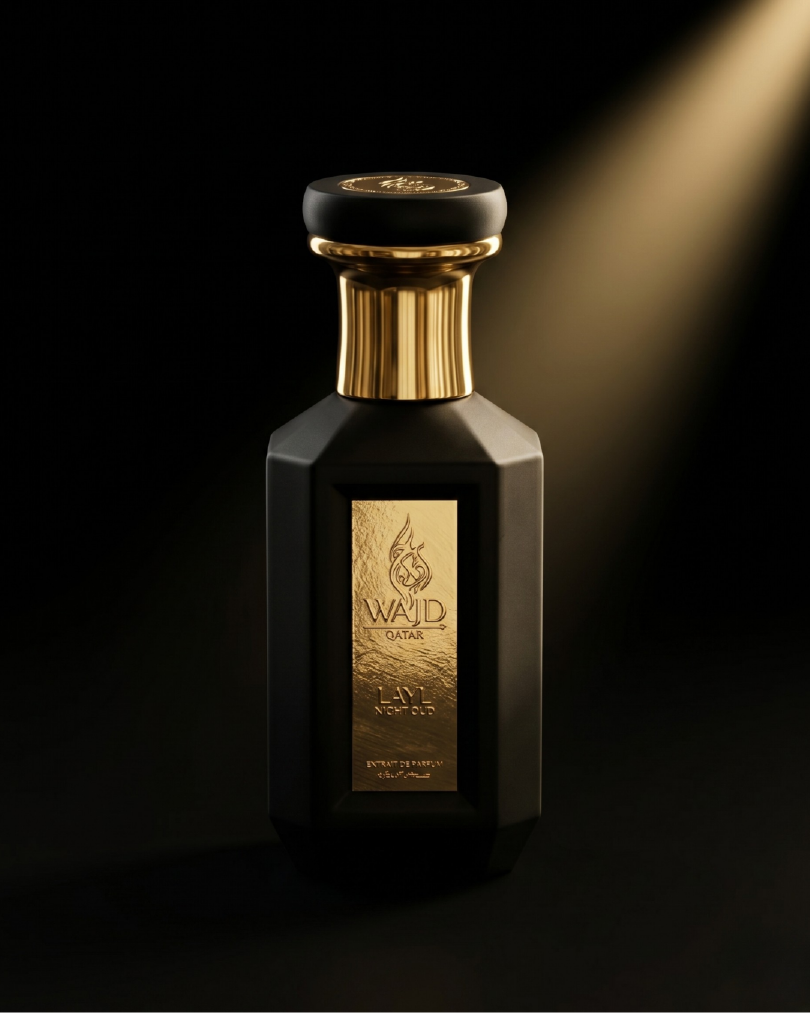
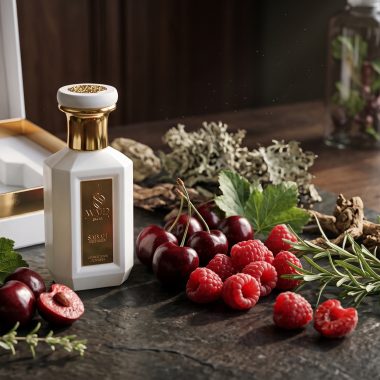
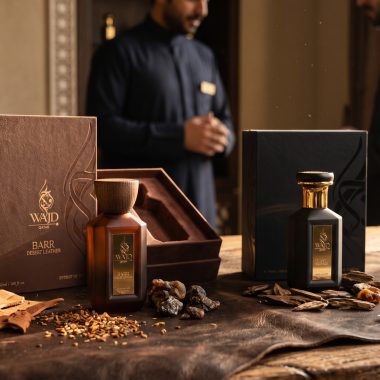
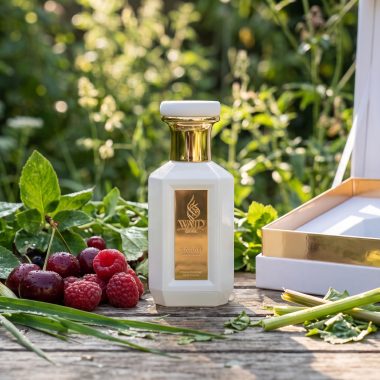
WAJD LAYL is an oud Extrait de Parfum made in Qatar. Rather, it does not use oud as a supporting note or as a gesture toward tradition. Oud is the foundation — dense, resinous, unmistakably itself — with camphor’s cool clarity cutting through, tobacco adding dry warmth, and leather closing everything in something worn and certain. It is built for those who already know what oud is. And for those who are encountering it properly for the first time. Alternatively, for something warmer and drier, WAJD BARR — desert leather, warm spice, amber, smoke — carries the same depth in a different direction. WAJD SABAH offers the collection’s brightest expression: dawn berry, green, musk. Discover WAJD LAYL →
Frequently Asked Questions
What does oud smell like?
Oud has a complex, resinous, woody scent that varies considerably by origin. Generally speaking, heavier base notes dominate. Indian oud tends toward smoky and animalic; Cambodian oud reads sweeter and more floral; Indonesian oud is typically cooler and woodier. All genuine agarwood shares depth and longevity, evolving on skin over several hours.
Is oud the same as agarwood?
Yes — oud, agarwood, aloeswood, and oudh all refer to the same material — the resin-saturated heartwood of infected Aquilaria trees. The name varies by region and language; the material is the same.
Why is oud so expensive?
Natural agarwood-producing trees are rare, slow-growing, and increasingly endangered. The resin that creates oud takes years or decades to form, and the highest-grade wild agarwood cannot be farmed at scale. Combined with growing global demand, this makes high-quality agarwood one of the most expensive fragrance materials by weight.
Is oud used in Qatar?
Extensively. Indeed, agarwood has been central to Qatari and Gulf fragrance culture for centuries — burned as incense, worn as oil, and used in formal and everyday contexts alike. It is one of the most significant fragrance traditions in the region.
WAJD Fragrances is a luxury Extrait de Parfum brand made in Qatar, built inside the Arabic fragrance tradition. Shop the collection →