Leather perfume occupies a strange place in fragrance. It rarely smells like leather itself. Instead, it recreates an impression — the warmth of a tanned hide, the smoke of a workshop, the faint animal undertone beneath a saddle or a glove. For buyers used to oud and amber, leather perfume offers something quieter. Consequently, it sits low in a composition and lets other notes take the foreground rather than dominating it.
In practice, leather perfume is one of the oldest accords in perfumery. Perfumers built it long before synthetic materials existed, using birch tar and animal-derived ingredients to suggest hide and hardware. Today, leather perfume still leans on that same idea: smoke, suede, and a trace of something animalic, balanced so it reads as refined rather than raw. In Qatar’s climate, that balance matters even more, since heat tends to amplify smoky base notes. For this reason, brands formulating for the region often dial back the rawest, most acrid leather materials in favour of smoother, more rounded versions of the accord.
What Does Leather Perfume Smell Like?
A well-built leather perfume rarely smells one-dimensional. Instead, it shifts across three distinct layers as it develops on skin:
- An opening that is often smoky or tarry, close to a struck match.
- A heart that turns suede-like — soft, slightly powdery, almost like the inside of a new handbag.
- A base that settles into something darker: tobacco, birch, or a faint animal warmth that never tips into harshness.
Consequently, leather perfume rarely stands alone in a composition. Perfumers pair it with saffron for spice, with amber for sweetness, or with oud for depth. As a result, the leather note becomes a frame rather than the whole picture — structure for other materials to lean against. In particular, this framing role explains why leather perfume often appears in the base rather than the opening of a fragrance.
How Perfumers Build the Leather Accord
Leather itself, the material, has almost no scent once tanned. Therefore, everything a perfumer calls “leather” in a fragrance is constructed from other materials entirely. Birch tar contributes the smoky, almost burnt edge associated with old-world tanneries. Quinoline derivatives add a dry, slightly bitter sharpness. Meanwhile, styrax and labdanum bring warmth and a faint sweetness underneath, softening the rougher edges.
In addition, castoreum — or, more commonly today, a synthetic substitute — once supplied the animalic depth that made early leather accords feel alive rather than flat. The tanning process used to produce genuine leather involves none of these aromatic materials, which is precisely why perfumers had to invent the smell from scratch. That said, modern leather perfume formulas favour cleaner synthetics over older animal-derived ingredients, for both ethical and regulatory reasons.
Historically, this style of construction dates back to the early twentieth century, when so-called “Cuir de Russie” fragrances popularised smoky, birch-forward leather accords across Europe. On the other hand, some houses today still chase that rawer, more old-fashioned leather profile. These versions trade refinement for character — closer to a tannery than a tailor’s workshop. Either approach is valid; the difference simply reflects which mood the perfumer wants leather perfume to carry. By contrast, a handful of niche houses push the accord even further toward smoke and tar, aiming for something closer to industrial than refined. This is a useful reminder: “leather” describes a family of effects, not one fixed scent.
Leather Perfume in the WAJD Collection
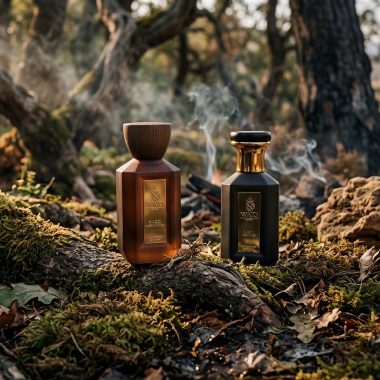
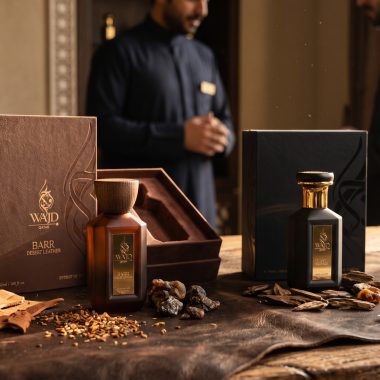
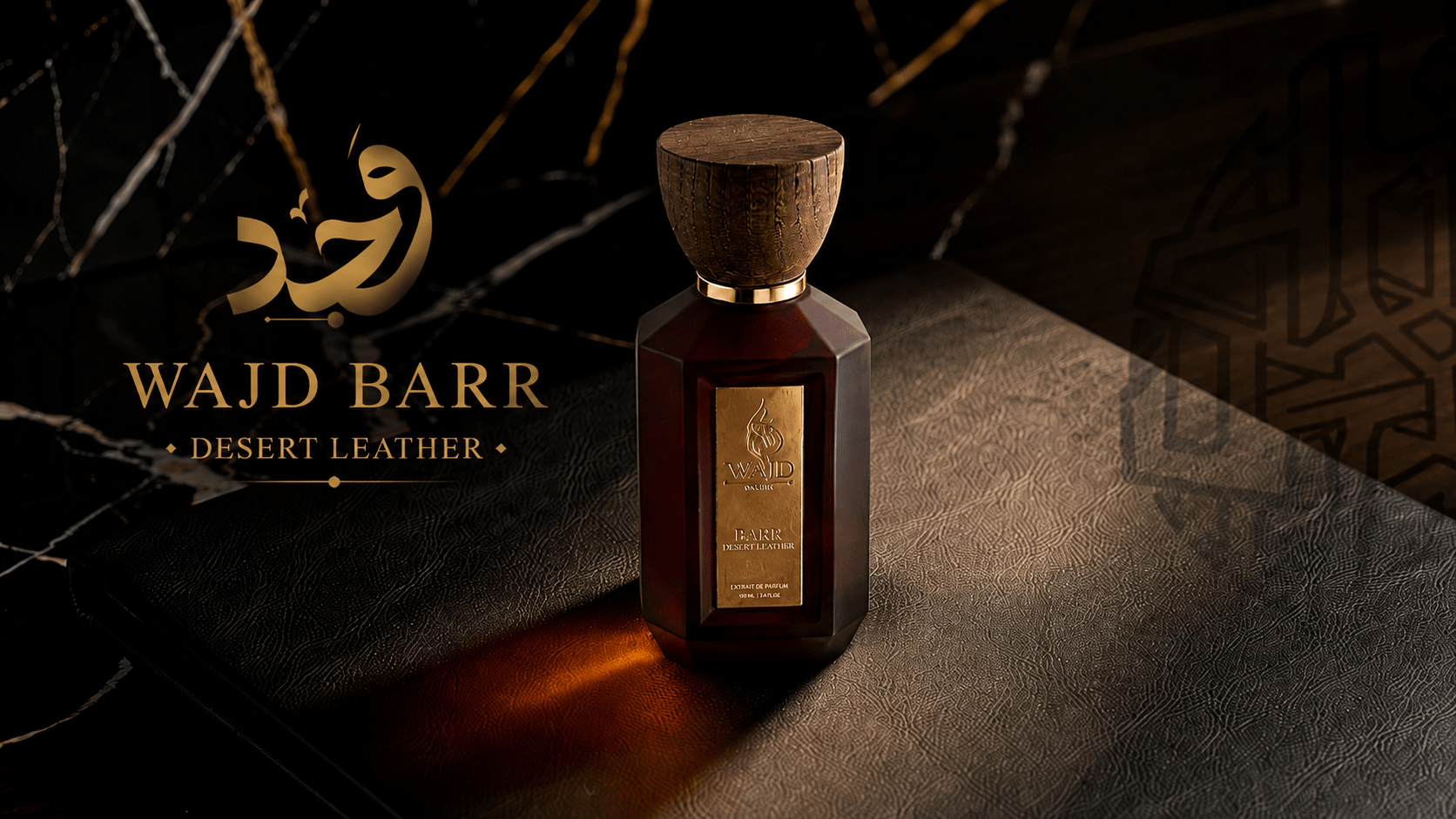
WAJD approaches leather perfume through WAJD BARR, a Desert Leather Extrait de Parfum built around exactly this tension between smoke and refinement. Rather than leaning on raw animalic notes, WAJD BARR pairs leather with dry desert warmth, giving the accord a Qatari character rather than a European one.
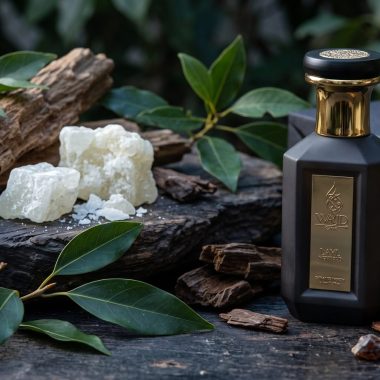
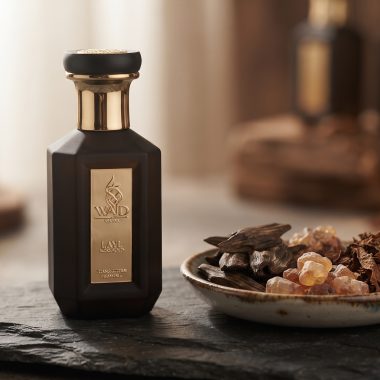
Meanwhile, for those who want leather alongside a darker, more resinous profile, WAJD LAYL Night Oud Extrait de Parfum offers a useful contrast. Layering the two is common practice among regular wearers: leather perfume worn underneath, oud applied lightly on top. As a result, the combination amplifies depth without pushing the scent into heaviness.
However, WAJD BARR works equally well alone. As an Extrait de Parfum, its concentration is high enough that the leather perfume accord develops slowly across several hours, rather than announcing itself all at once. For example, the smoky opening tends to settle within the first thirty minutes, leaving the suede-like heart to carry most of the day. In humid or air-conditioned indoor settings, that heart can read even softer than usual. For this reason, regular wearers often reapply lightly in the evening rather than doubling the dose each morning.
Frequently Asked Questions
Does leather perfume actually contain real leather?
No. Tanned leather has almost no smell on its own. Therefore, leather perfume is built from birch tar, quinoline, styrax, and similar materials chosen to evoke hide and smoke rather than extracted from it directly.
Is leather perfume suitable for everyday wear?
Yes, in most cases. Modern leather perfume is usually balanced with warmer or sweeter notes, which softens the smoky opening. As a result, a well-blended version reads as polished rather than harsh, even in an office setting.
Is leather perfume only for men?
No. The association with menswear is mostly historical. In particular, many contemporary leather perfumes are styled as unisex, pairing the accord with florals, fruit, or amber to broaden its appeal.
How long does a leather perfume last on skin?
That depends on concentration. In contrast to lighter formats, an Extrait de Parfum version typically lasts eight hours or longer, since the leather accord is built on slow-releasing base notes.
Discover WAJD BARR and the rest of the collection in the WAJD shop.