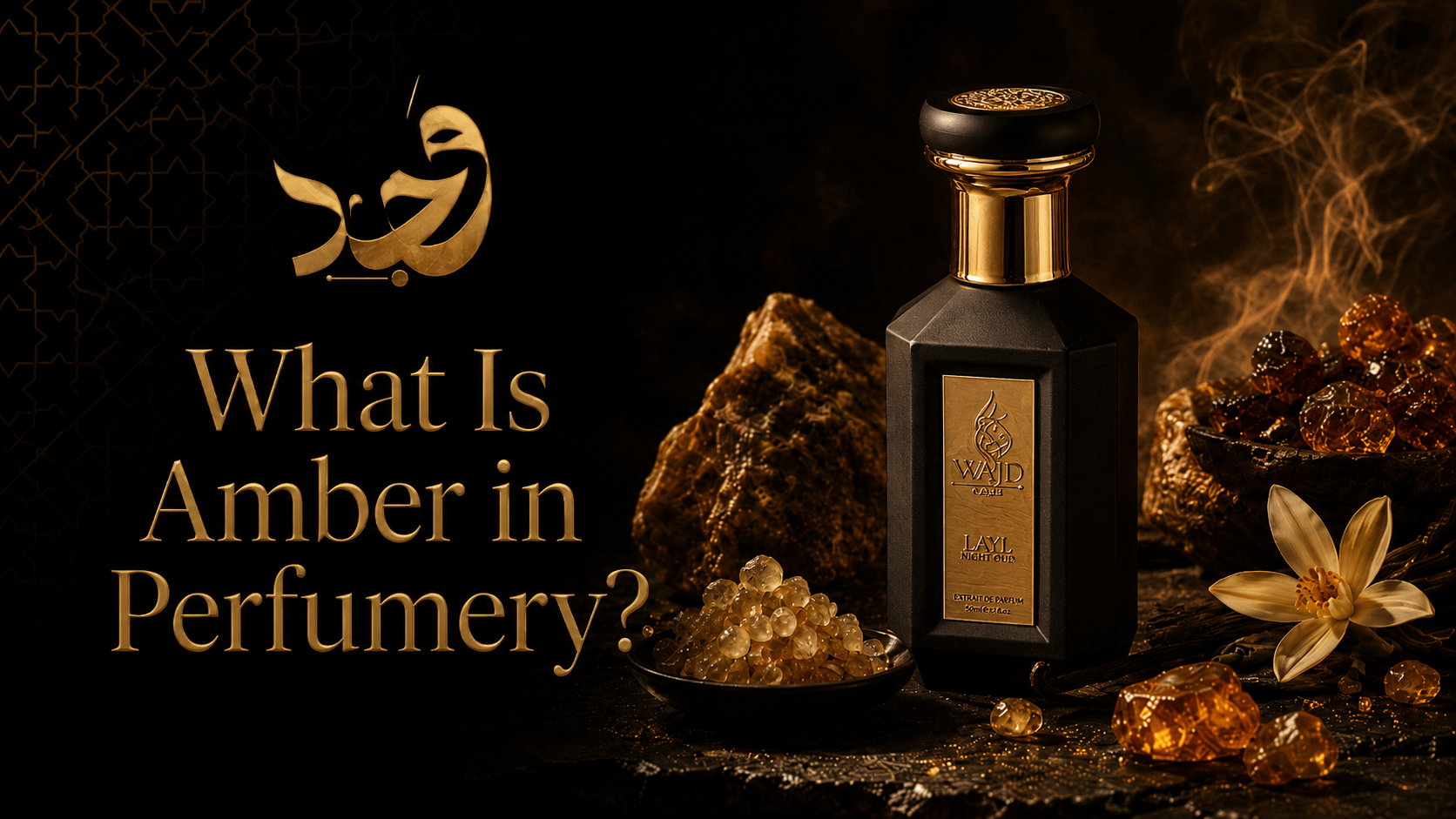
Amber in perfumery is not the fossilized resin used in jewelry. It is a warm, golden fragrance accord built from labdanum, benzoin, and vanilla, recreated today mostly with synthetic ambroxan. An amber fragrance brings depth, warmth, and lasting power to a composition, which is why it anchors so many extrait de parfum blends, including several from WAJD.
The Amber Fragrance Note: Resin, Not Stone
The name causes confusion. Amber the gemstone is fossilized tree resin, formed over millions of years and used in beads and jewelry. An amber fragrance shares only the color and a sense of age with its mineral namesake. However, perfumers build it in days, not millennia.
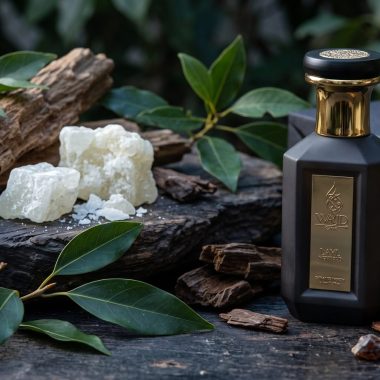
An amber fragrance is a constructed accord rather than a single raw material. Labdanum, harvested from the rockrose shrub, supplies a leathery, slightly smoky sweetness. Benzoin contributes a soft, vanilla-like resin. Tonka bean or vanilla itself rounds out the warmth. Together, these three notes form what French perfumers historically called “ambre.”
The word itself traces back further still. “Amber” descends from the Arabic anbar, which originally referred to ambergris before European languages broadened the term to also cover fossilized resin. In particular, that Arabic root makes the note a fitting one for a Qatar-made house. The word and the material both trace back to the same part of the world.
In particular, no two amber fragrances smell identical. Furthermore, the ratio of labdanum to benzoin to vanilla shifts the character from dry and woody to sweet and gourmand. As a result, an amber fragrance from one house can smell completely different from another’s, even when both call it amber.
Ambergris, Labdanum, and Synthetic Ambroxan
True ambergris is a separate material from the amber fragrance accord described above. It forms in the digestive tract of sperm whales and washes ashore after years at sea. Historically, perfumers prized it as a fixative that made other scents last longer on skin.
However, ambergris is rare, expensive, and increasingly avoided on ethical grounds. In 2021, fishermen off the coast of Yemen found a 127-kilogram piece of ambergris worth roughly US$1.5 million, according to Wikipedia’s entry on ambergris. That scarcity has priced it out of nearly every modern fragrance house.
Consequently, the industry turned to ambroxan, a synthetic molecule that recreates ambergris’s warm, musky base note at a fraction of the cost. Most fragrances marketed today as amber, musk, or “skin scent” lean on ambroxan rather than the original animal-derived material. In practice, this shift also removed the conservation concerns tied to whale-derived ingredients.
Wearing an Amber Fragrance in Extrait de Parfum
WAJD Fragrances is a luxury Extrait de Parfum brand made in Qatar, and amber sits underneath several of its compositions as a base rather than a headline note. In extrait de parfum concentration, amber’s natural staying power matters more than in lighter formulations. That said, the same resinous warmth would fade quickly in a diluted eau de toilette.
In Qatar’s climate, where summer temperatures regularly pass 45°C, heavier base notes evaporate faster than they would in a cooler region. However, the higher raw-material concentration in extrait de parfum compensates for that heat, so an amber fragrance still holds through a long afternoon.
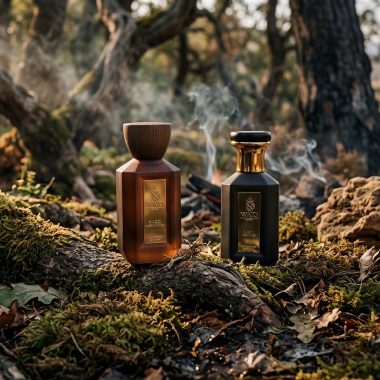
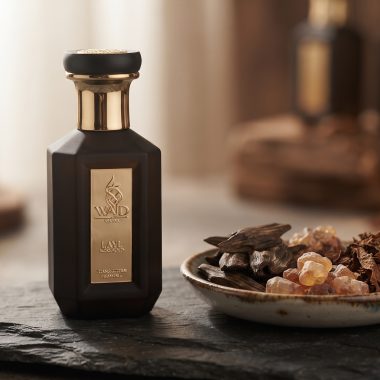
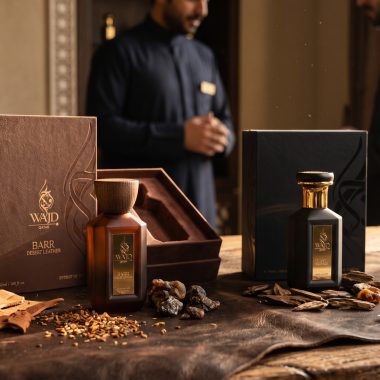
An amber fragrance pairs naturally with oud, leather, and spice. For example, WAJD LAYL, our Night Oud Extrait de Parfum, layers dark resins beneath its oud heart for added depth after sunset. Meanwhile, WAJD BARR, our Desert Leather Extrait de Parfum, uses a drier amber base to support its leather accord without adding sweetness.
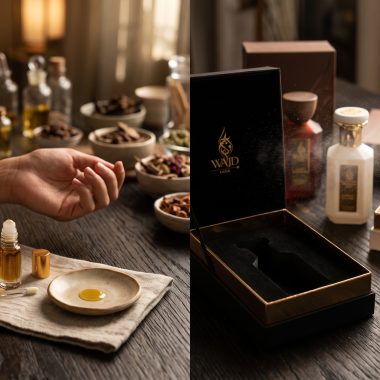
In practice, an amber fragrance works best on skin rather than fabric, since body heat draws out its warmth gradually over several hours. Therefore, apply it to pulse points and let the extrait concentration do the rest of the work.
How to Spot Real Amber on a Fragrance Label
Ingredient lists rarely use the word “amber” outright, since amber is a fragrance family rather than a single regulated material. Therefore, the clearest signal is the supporting note list a brand publishes alongside a perfume.
Look for any combination of the following on a product page or fragrance pyramid:
- Labdanum or “rockrose”
- Benzoin or “Siam benzoin”
- Ambroxan, ambroxide, or “amber accord”
- Tonka bean paired with a warm base description
In contrast, a fragrance described only as “fresh,” “citrus,” or “aquatic” is unlikely to carry an amber fragrance base. Those families rely on volatile top notes rather than heavy resins. On the other hand, a perfume marketed as “oriental,” “gourmand,” or “spicy” almost always leans on an amber fragrance foundation underneath.
Frequently Asked Questions
Is amber in perfume the same as the gemstone?
No. The gemstone is fossilized tree resin used in jewelry. The fragrance note is a constructed accord of labdanum, benzoin, and vanilla, built to evoke a similar warm, golden character.
What does an amber fragrance smell like?
An amber fragrance typically smells warm, resinous, and slightly sweet, with notes of labdanum, vanilla, and benzoin. Some versions lean dry and woody, while others lean toward a sweeter, gourmand profile.
Is ambergris still used in modern perfumes?
Rarely. Most modern fragrances use synthetic ambroxan instead of true ambergris, since ambroxan reproduces the same warm, musky effect at a far lower cost and without ethical concerns.
Does an amber fragrance last longer than other notes?
Yes. Amber compounds are heavy, low-volatility molecules that evaporate slowly. As a result, they typically form the base note and outlast lighter top and middle notes on skin.
Explore WAJD’s amber fragrance and oud compositions in the shop.