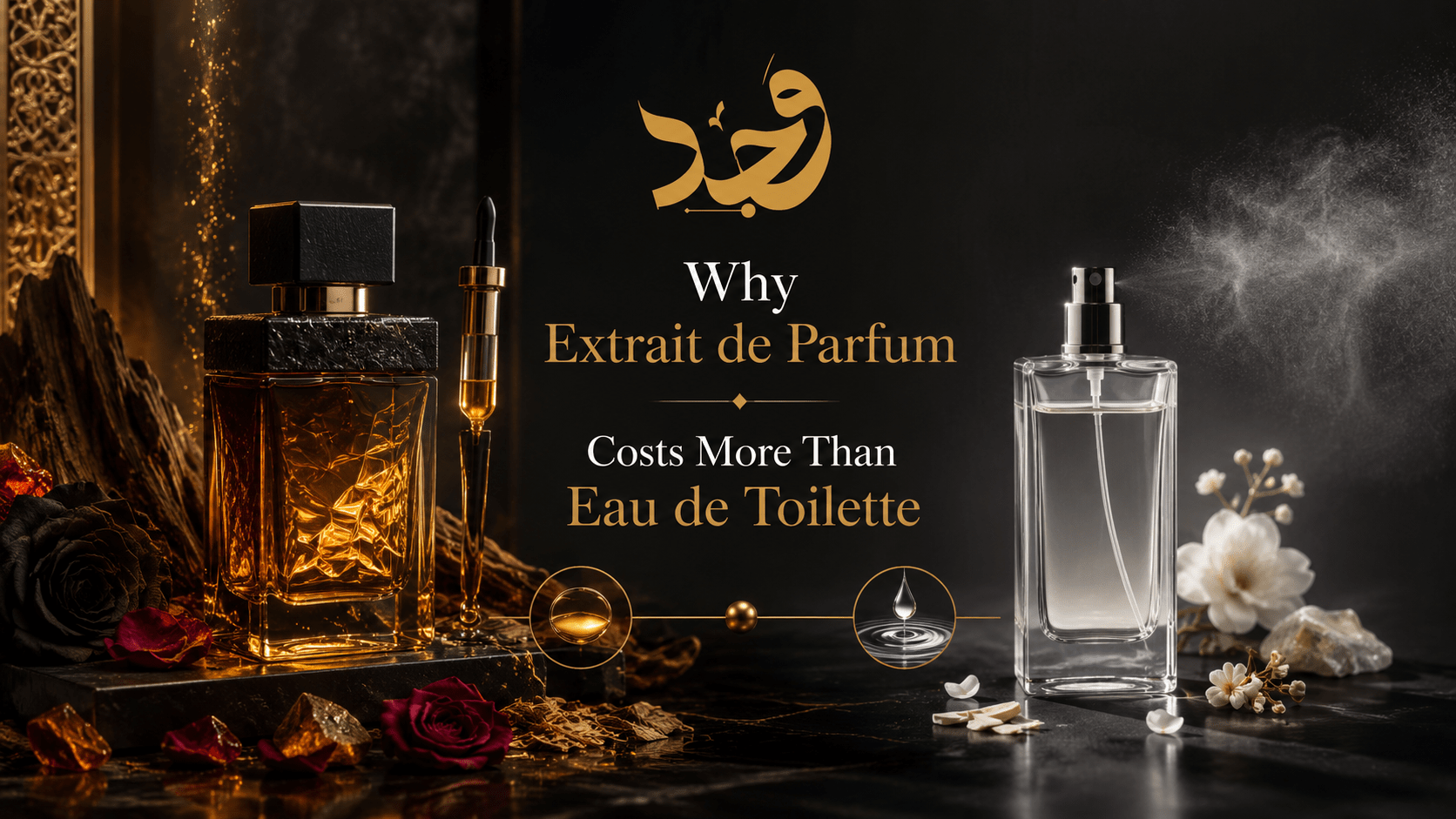
Extrait de parfum price sits well above eau de toilette because it holds four times the aromatic oil, uses costlier raw materials, and demands more of a perfumer’s time. A 50ml bottle of extrait de parfum often costs QAR 400–800 more than the same size in eau de toilette. The gap reflects ingredient volume, not marketing.
What Sets Extrait de Parfum Apart from Eau de Toilette
Extrait de parfum contains 20–40% aromatic oil, with 30% as the typical average. In contrast, eau de toilette holds just 5–15% aromatic compounds, according to Wikipedia’s entry on eau de toilette. That difference in concentration is the single biggest driver behind the extrait de parfum price gap. In practice, this piece breaks down why the extrait de parfum price differs, ingredient by ingredient.
More oil means less filler. Eau de toilette dilutes its aromatic compounds in a large volume of alcohol and water. By contrast, extrait de parfum uses barely any dilutant at all. As a result, every millilitre in the bottle carries far more raw perfumery material. And raw material is the most expensive input in the entire production process.
Consider a simple example. For example, a 50ml eau de toilette might use around 5ml of pure aromatic oil. Meanwhile, the extrait de parfum version of the same scent can use 15–20ml in an identical bottle. That said, the raw oil alone can account for most of the extrait de parfum price difference before packaging or labour is even added.
What Drives the Extrait de Parfum Price
Three factors set the extrait de parfum price beyond what eau de toilette commands. First, raw ingredient cost matters most. In particular, suppliers price natural oud, rose absolute, and sandalwood oil per gram, not per litre. As a result, a single extrait batch can use several times the ingredient volume of a lighter formulation.
Second, ageing and maceration add cost. Many extrait de parfum formulations rest for weeks after blending so the oils marry properly. Consequently, that resting period ties up inventory and production capacity. Third, bottling and packaging carry a premium. Brands positioning a product as an extrait de parfum typically invest in heavier glass, metal caps, and presentation boxes to match the concentration inside.
In practice, the extrait de parfum price also reflects smaller batch runs. Brands produce concentrated formulations in lower volumes than mass-market eau de toilette lines. Therefore, per-unit cost rises accordingly.
Is the Higher Extrait de Parfum Price Worth It?
The answer depends on how a fragrance is worn. Extrait de parfum lasts longer on skin, often eight hours or more. As a result, fewer applications are needed across a day. Meanwhile, eau de toilette wears off within two to four hours and typically needs reapplication. Therefore, when cost per wear is calculated rather than cost per bottle, the extrait de parfum price gap narrows considerably.
For a fragrance worn daily to the office or a formal event, that difference in projection and longevity matters. However, someone who wants a light, casual scent for daytime layering may not need the intensity extrait de parfum provides. In that case, the higher extrait de parfum price buys performance the wearer will not use.
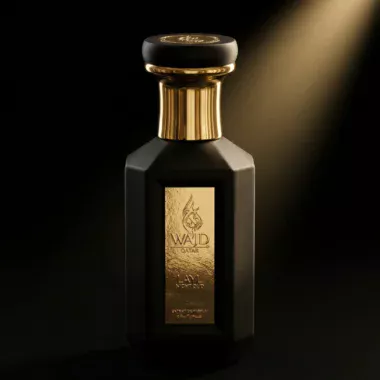
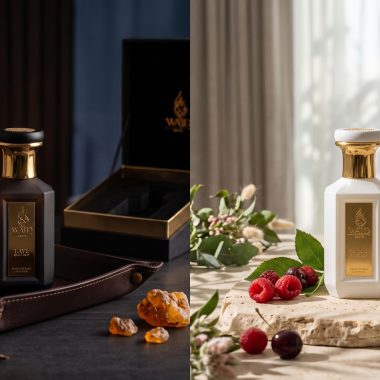
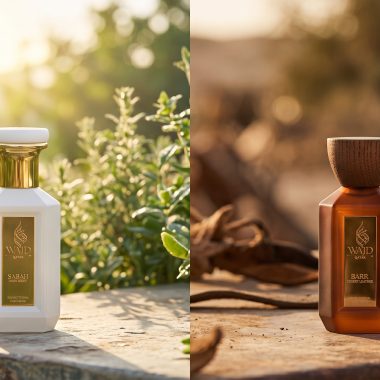
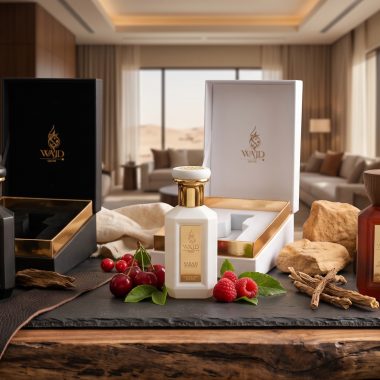
WAJD Fragrances is a luxury Extrait de Parfum brand made in Qatar, and every release is formulated at full concentration rather than diluted down. WAJD LAYL, a Night Oud Extrait de Parfum, and WAJD SABAH, a Dawn Berry Extrait de Parfum, both use this full-strength approach rather than a lighter dilution. This is part of why the extrait de parfum price for WAJD releases matches the ingredient reality rather than being padded by cheap filler.
How to Judge Value Beyond the Price Tag
Price alone does not tell the full story. In particular, three checks help put the extrait de parfum price in context before you buy:
- Check the concentration percentage on the box, if listed.
- Compare cost per millilitre rather than cost per bottle.
- Ask how many hours of wear you get from one application.
In addition, consider whether the brand ages or macerates the blend before bottling. That step adds production time, and production time adds cost. WAJD BARR, a Desert Leather Extrait de Parfum, is formulated the same way: full concentration, no shortcuts, no padded filler to cut cost.
Frequently Asked Questions
Is extrait de parfum always more expensive than eau de parfum?
Usually, yes. Extrait de parfum carries a higher oil concentration than eau de parfum. As a result, the extrait de parfum price typically runs 20–40% higher per bottle. That said, pricing varies by brand and ingredient sourcing.
Does a higher extrait de parfum price guarantee better quality?
No. Price reflects concentration and ingredient cost, not craftsmanship. A well-formulated eau de parfum from a skilled perfumer can outperform a poorly blended extrait de parfum.
How much extrait de parfum should I apply given the price?
Two to three sprays on pulse points is usually enough. Extrait de parfum is more concentrated, so less product achieves a stronger effect than eau de toilette. As a result, this offsets the extrait de parfum price over time.
Why do some brands charge a premium beyond ingredient cost?
Packaging, limited production runs, and brand positioning add cost on top of raw ingredients. In particular, this is separate from the aromatic oil concentration itself. As a result, it can inflate the extrait de parfum price beyond what the formulation alone would justify.
Explore WAJD’s full-concentration Extrait de Parfum collection in the shop.